
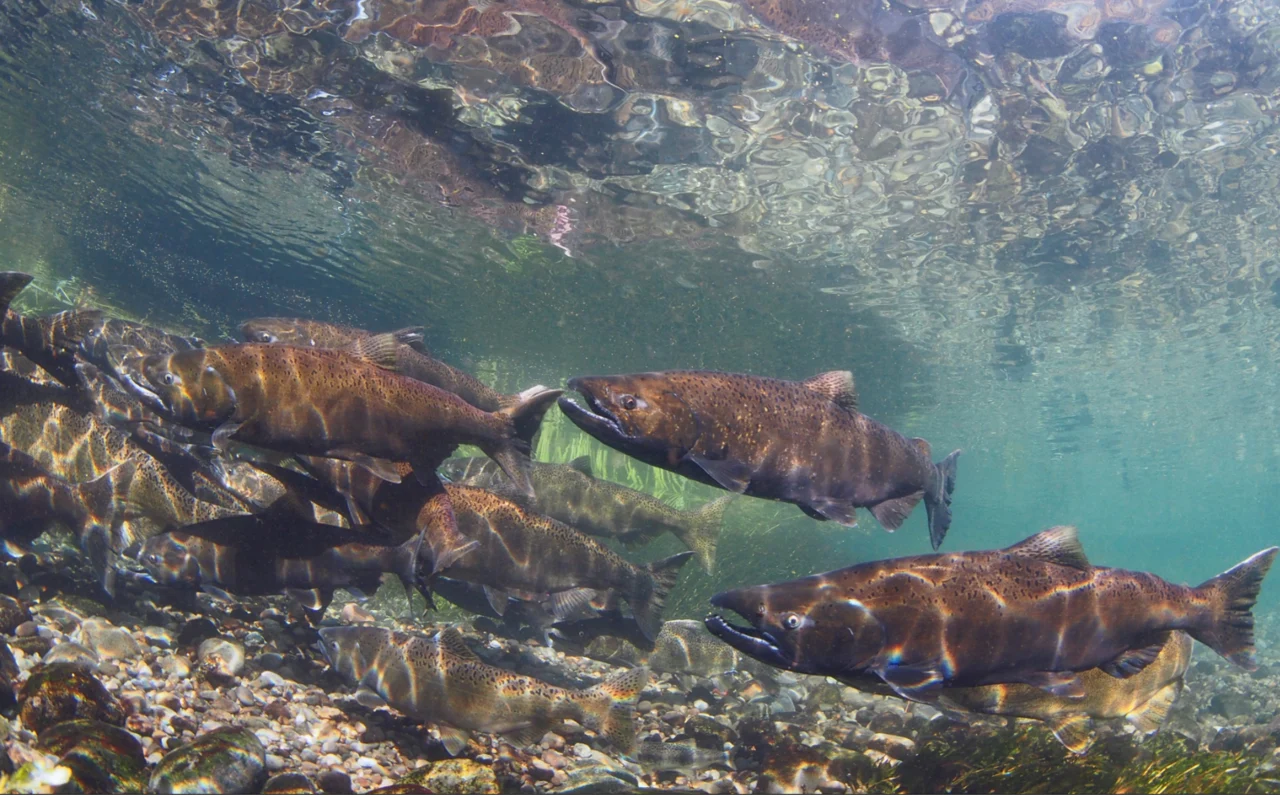
North America is too large for one best fishing month or one starter outfit. A Kenai Peninsula river, Lake Nipissing and Tampa Bay offer three very different lessons: controlling a drift, finding a lake edge, and keeping a lure above shallow grass. Choose one base and practise a repeatable method before adding species or long transfers.
The places and fish below are documented examples, not promises that every bank is accessible or every species is open today. All tackle sizes, depths and session timings are practical starting suggestions to adjust to observed conditions. They are not biological limits or regulations.
Choose the water and the lesson
| Base and structure | Likely target | Food or holding reason | Starting method | Presentation | Important caveat |
|---|---|---|---|---|---|
| Kenai Peninsula, softer seam beside a gravel run | Rainbow trout | Drifting insects; seasonal salmon eggs and flesh | Single nymph or egg-pattern fly | Upstream drift near the bed without dragging | Exact reach and date determine legal tackle |
| Lake Nipissing, sand-to-rock edge | Walleye | Small fish near a depth or substrate change | Small soft-plastic jig | Short lifts followed by controlled falls | Walleye season is not open all autumn |
| Nipissing, rock beside vegetation | Smallmouth bass or northern pike, depending on habitat | Crayfish and fish; ambush cover | Search lure, then slower presentation | Work the outside edge before entering cover | Pike need a suitable bite-resistant trace |
| Tampa Bay, sandy opening in seagrass | Spotted seatrout | Shrimp and small fish crossing an exposed patch | Paddletail or shrimp beneath a float | Swim above grass; pause over sand | Depth changes with tide and wind |
| Tampa Bay, mangrove or channel edge | Red drum or common snook | Cover beside a food-carrying route | Accurate soft-plastic cast | Present along the edge, not through roots | Do not transfer one species' rules to another |
Alaska: learn a controlled trout drift
Cooper Landing, Sterling and Soldotna are useful Kenai Peninsula bases. Public recreation sites and guided trips provide practical access options; a road beside the river does not make the adjoining bank public. Plan the exact reach with its manager or guide. The September 24, 2026 local fishing report described trout activity between The Dunes and Bings Landing, and around the upper-river salmon spawning areas. That is dated seasonal evidence, not a live November catch forecast.
Resident rainbow trout are Oncorhynchus mykiss, the same species as sea-running steelhead. Dolly Varden are char, not rainbow trout. Young rainbows depend heavily on small invertebrates; larger fish can add small fish and the eggs and flesh supplied by salmon runs. Inspect the water before choosing an imitation. An egg pattern makes sense when eggs are actually available, while an insect nymph is a more defensible starting point when they are not.
Look for a slow strip alongside faster water, a depression behind stones, or the downstream end of a run. These places can provide feeding opportunities without requiring a trout to hold in the strongest current. Begin at the near edge before walking into it. A visible spawning patch is something to avoid trampling, not somewhere to stand for a better cast.
For a manageable starting outfit, use a 9-foot, 6-weight fly rod, matching floating line and a reel with a smooth drag. Attach a roughly 2.7-metre tapered leader ending in about 8–10 lb tippet, then one permitted size 8–12 nymph or egg-pattern fly. Hook sizing varies between patterns. Use a weighted fly only where the reach rules allow it; do not assume a bead, separate weight and artificial fly are legally interchangeable. If an indicator is permitted, set it initially a little deeper than the estimated water depth, then tune by observation.
Cast a short distance upstream and slightly across the seam. Lift excess fly line off the fast surface current and mend gently so it cannot tow the fly. Follow the drift with the rod tip. An indicator that hesitates, travels sideways or disappears deserves a smooth lift to tighten the line. Repeated hard stops at the same place usually mean bottom contact: shorten the depth or lighten the fly. Never strike repeatedly through visible salmon.
An alternative is a small streamer on the same outfit, where permitted. Cast across and slightly downstream, let it swing under light tension, then retrieve with short strips and pauses. This imitates a moving food item rather than a drifting one. Try it when small fish are visible or careful dead drifts find no feeding trout. A sunk fly is not automatically near the bottom: strong surface drag can lift it.
Chinook or king salmon, Oncorhynchus tshawytscha, are a separate trip objective, not an incidental upgrade to this trout setup. The retained cover shows Chinook in Washington, not a Kenai catch. Kenai king-salmon fishing is closed in the 2026 guidance; do not book a Kenai king trip on the strength of a general destination description. Homer and Seward offer coastal charter alternatives, but halibut and salmon trips require their own tackle, availability and current-rule checks.
Ontario: work a change in bottom, not the whole lake
Lake Nipissing offers a useful contrast between shallow bays and open-water structure. North Bay is a practical planning base. Choose a verified launch or lodge access suitable for your boat and wind conditions; an ice-access listing is not confirmation of a summer launch. Ask for a sheltered first-day area rather than attempting a long crossing simply because the destination is famous.
Walleye, Sander vitreus, are often locally called pickerel, but they are not the pike-family pickerels. Smallmouth bass, Micropterus dolomieu, and northern pike, Esox lucius, require different presentations and handling. Walleye shift from invertebrates toward a mainly fish diet as they grow. On Nipissing, shallow spring habitat and later sand, rock and deeper edges are useful seasonal starting points, not fixed depth rules. Smallmouth feeding around rocks may be exploiting crayfish as well as baitfish.
For walleye, start with a 2.1-metre medium-light spinning rod, 2500-size reel, 10 lb braid and 1–1.5 metres of 8–12 lb leader. Join braid to leader with a properly tied connection knot and tie a 3.5–10 g jig head to the leader. Thread a 7–10 cm soft plastic straight onto its hook, leaving the point clear. A bent body spins and changes both its action and sink rate.
On an open-season trip, begin on an edge in roughly 2–6 metres where wind and boat control permit. Cast slightly ahead of the drift, allow the jig to settle, then lift it only enough to clear the bottom. Follow it down with light line contact. A tick, unexpected slack or additional weight can be a bite: reel out slack and make a short, firm lift. If the line trails far behind, you have lost useful contact. Shorten the cast, slow the drift or increase weight one step.
Where bait is permitted, a slip-float rig is a slower alternative. Slide a bobber stop, bead and sliding float onto the main line, tie on a small swivel, then add a 60–90 cm leader and a size 4–6 hook. Place enough split shot above the leader to cock the float, keeping the hook unobstructed. Use a permitted locally obtained worm bait, and set the stop to suspend it just above the measured bottom. Let the float settle before interpreting a steady submergence; tighten and lift rather than making a violent strike.
Start with a natural baitfish-colored plastic in clear water; test a more contrasting version when visibility is poor. This is a visibility experiment, not proof that a color guarantees bites. After fifteen minutes without contact, first change depth or the section of edge. Only change color after presenting effectively where fish might actually be.
Florida: keep the lure above the grass
Tampa Bay's grass beds, sandy holes, channels and mangrove margins support different feeding positions. Spotted seatrout, Cynoscion nebulosus, are saltwater drum-family fish, not freshwater trout. Red drum, Sciaenops ocellatus, and common snook, Centropomus undecimalis, are distinct alternatives. Do not assume one identification, size limit or seasonal rule covers all three.
Seatrout take shrimp, crabs and small fish, including mullet. Grass provides cover for prey; adjacent bare patches offer an easier interception point. During temperature extremes, nearby deeper water can become more useful than an exposed flat. Begin with a licensed local guide or confirmed public launch and identify a sheltered grass-and-sand area with enough water for your boat. Neither a habitat map nor a channel marker grants access across private shore.
Use a 2.1-metre medium spinning rod, 2500–3000 reel, 10–15 lb braid and 60–90 cm of 15–20 lb leader. Tie on a 3.5–7 g jig with an 8–10 cm paddletail. Cast beyond the sandy opening and retrieve steadily so the lure passes over the grass tips. Pause briefly over clean sand. If every cast returns with weed, start retrieving earlier or use less weight. Repeatedly ripping through grass damages habitat and is poor presentation.
A float and live shrimp offer a slower alternative where allowed. Tie the main line to a popping float's upper swivel, add a 45–90 cm leader beneath it and finish with a suitable small shrimp hook. Hook the shrimp lightly through the tail section, leaving it lively and the point exposed. Adjust the leader so the bait stays above vegetation. Make a gentle pop, allow a pause, then recover slack. With a circle hook, reel steadily into sustained pressure rather than snapping the rod to set it.
Fish moving water when it permits control, but do not promise an incoming-tide bite everywhere. Observe the actual direction around points and channels. Cast across and slightly up-current so the lure travels naturally past the edge. Compare several depths before concluding that the fish are absent.
A first-session plan and brief local notes
Spend ten minutes watching, checking depth and identifying a near holding edge. Fish short casts first, then fan farther out. Use one presentation long enough to establish its sink rate and bottom contact. After twenty minutes without a response, change one variable: depth, drift line or retrieve speed. After another ineffective pass, move to a different piece of the same habitat. Record where the bite occurred so you can repeat the useful part of the cast.
As checked November 1, 2026, Ontario's Lake Nipissing walleye season ended October 15; do not use the walleye plan there now. Consult the FMZ 11 exceptions and closure dates. For Alaska, use ADF&G's exact-reach map and emergency orders. For Florida, use FWC's Tampa Bay seatrout region and separate snook/red-drum rules. These links are provided below; check again for the actual trip date.
Wear flotation on boats, avoid unsafe wading and handle fish with wet hands and a supporting net. Keep a fish intended for release in the water while preparing removal tools. A shorter controlled session on suitable water teaches more than a long trip spent battling conditions.