
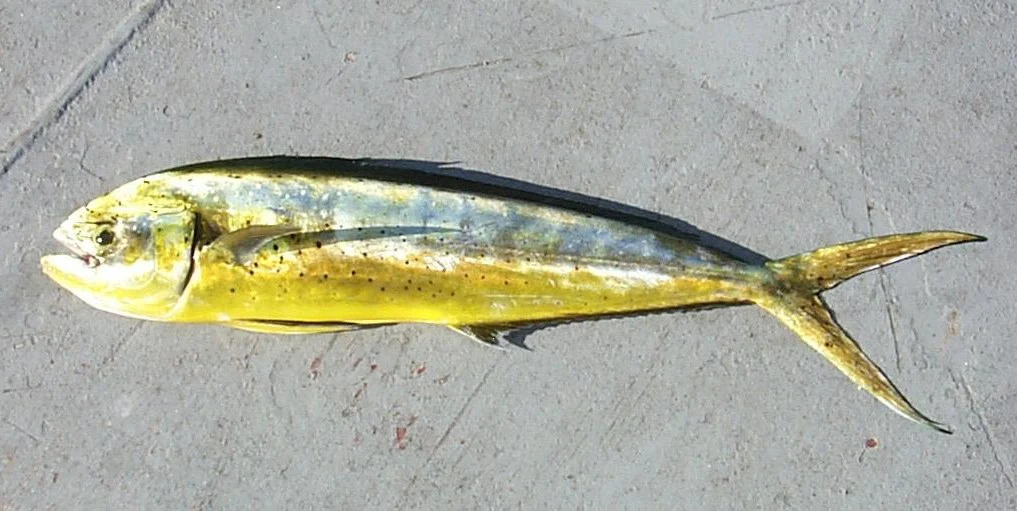
A Pacific fishing holiday becomes easier to plan when you choose a fishing situation before a fish photograph: a crewed offshore search for mahi-mahi, a tuna trip suited to the boat and tackle, or an Oʻahu reservoir session. Hawaiʻi, Guam and the Philippines offer different access, weather and rules. They are alternatives, not interchangeable stops on one fishing ground.
The geographical and biological background below comes from the linked sources. Rod sizes, weights, speeds and session sequences are practical starting suggestions for the stated conditions, not tested prescriptions for every island. Let the skipper adjust offshore tackle to the fish actually present.
Choose a departure and a realistic target
On Hawaiʻi Island, Honokōhau Harbor north of Kailua-Kona is an established charter departure for offshore fishing. Ask for a mahi-mahi and smaller pelagic trip if you want manageable tackle and participation. A boat targeting large marlin may spend the same hours fishing a very different spread.
Guam supports charter trolling and bottom fishing. Specify trolling for pelagics rather than assuming a deep-sea booking means the same method everywhere. Confirm the actual departure harbor, expected travel time and whether you will handle a rod during the search or only after a strike.
In the Philippines, Siargao in Surigao del Norte is an established game-fishing destination with guided trips. Confirm the operator's departure, current operating conditions and realistic target before arranging accommodation around a fishing day. A destination listing establishes an opportunity, not a current report of fish at a particular reef or permission to fish any shoreline.
For freshwater, Oʻahu's Wahiawā Public Fishing Area includes part of Lake Wilson, a privately owned reservoir. The state freshwater park on the South Fork provides a boat-launch and parking access point. That does not make the entire reservoir shore public. Choose an authorized bank area or an operator familiar with the permitted water.
Know which fish you are looking for
Mahi-mahi, also called dolphinfish or dorado, is Coryphaena hippurus: a fish, not a dolphin. Its long dorsal fin, compressed body and blue-green and gold coloring are useful recognition features. The similar pompano dolphinfish is a different species. Mahi-mahi have a broad, square tooth patch on the tongue, and dorsal-fin ray counts also distinguish them; color alone is not definitive. Let the crew confirm an uncertain identification without prolonging handling. The existing cover shows mahi-mahi, but the source photograph was taken in the Gulf of Mexico and does not document a catch at these destinations.
Yellowfin tuna, Thunnus albacares, is another offshore option. Do not treat every small tuna in a mixed school as yellowfin; have the crew identify the fish before retention. Yellowfin eat fish, squid and crustaceans, and their working depth varies with size and conditions. Surface activity reveals only part of the available water column.
Mahi-mahi are active daytime predators of varied small marine prey. Floating material and offshore fish aggregating devices can concentrate prey and predators; they do not manufacture fish or guarantee a bite. A tide line with scattered weed and bait activity deserves investigation, while an empty buoy may deserve only a short pass.
Wahiawā offers a different problem: introduced largemouth bass, listed locally as Micropterus salmoides, and tucunare or peacock bass, listed as Cichla ocellaris. Tucunare have vertical bars and a conspicuous tail spot; they are not largemouth bass. Their prey includes small shad, tilapia and other fishes. Largemouth use bank cover and submerged vegetation; smaller fish take insects and crustaceans as well as fish, while larger fish eat fish and crayfish. Neither fish's presence gives permission to introduce bait or move fish between waters.
Match the situation to the presentation
| Situation | Likely target | Holding or feeding reason | Starting method | Presentation | Change or caveat |
|---|---|---|---|---|---|
| Offshore debris edge with bait | Mahi-mahi | Floating cover can concentrate prey | Small skirted trolling lure | Pass beside the edge with the lure running cleanly | Check for weed before changing color |
| Birds and small fish breaking offshore | Yellowfin or mixed pelagics | A moving feeding opportunity | Crew-selected small trolling lure or casting jig | Intercept the edge of activity without driving through it | Identify tuna; large fish require stronger tackle |
| Fish visible beside the boat | Mahi-mahi | Followers may inspect a slower offering | Unweighted bait or small jig | Present away from propellers, then let it settle | A refusal calls for a smaller or more natural presentation |
| Wahiawā wood or vegetation margin | Largemouth bass | Cover places an ambush point beside prey | Light Texas-rigged soft plastic | Short casts parallel to the edge, controlled fall | Keep outside dense branches; lighten repeated snags |
| Open reservoir edge with chasing fish | Tucunare or largemouth | Small fish are exposed away from cover | Small minnow lure | Cast past the disturbance and retrieve through its edge | Avoid visibly guarding spawning fish |
These are search situations, not a promise that each species occurs at every departure or structure.
A manageable offshore trolling setup
For smaller pelagics on a crewed boat, a 1.7–2.1 m boat rod with a conventional reel carrying roughly 30–50 lb line is a reasonable discussion point. The skipper may choose much heavier equipment if large tuna or billfish are likely. A balanced reel with enough reserve line matters more than its nominal size.
A simple mahi-mahi spread can include a 12–18 cm skirted lure on a 1.5–3 m abrasion-resistant monofilament leader around 60–100 lb. The crew connects the main line to a rated swivel, attaches the leader, threads the leader through the lure head and secures a single hook sized to the skirt, approximately 5/0–8/0 as a starting range. Hook dimensions vary by manufacturer. Crimps, chafe protection and hook position need a crew check; an incorrectly sized crimp can defeat otherwise strong tackle.
Start with a lure that swims straight beside the boat. Around 5–7 knots may suit some skirted lures, but choose speed by the lure's action and sea state, not the number on the display. It should work repeatedly without tumbling or skipping uncontrollably. Put it in a clean lane behind the boat and stagger the spread to avoid tangles during turns. Weed on the hook or leader can stop an attractive lure fishing properly.
Silver-blue or green-backed patterns are sensible first imitations of small fish. Carry a contrasting darker or brighter option for comparison when visibility changes, but do not treat a color as a guaranteed cloudy-day or moon-phase rule. If the spread receives no attention, check clean running, prey size and location before buying into a color explanation.
When a fish strikes, leave the rod secured until the crew tells you to lift it. Keep steady pressure and wind when line can be recovered; repeatedly snapping the rod adds slack and can tear out a hook. The crew should control the leader and landing.
When casting or bait is the better alternative
A following mahi-mahi may ignore a fast lure while accepting a slower offering. A 2.1–2.4 m medium-heavy spinning rod, roughly 5000–8000-size reel, 20–40 lb braid and 1–2 m of 40–60 lb leader provide a practical small-pelagic alternative, subject to expected fish size.
Tie on a 20–40 g metal jig or 8–12 cm soft bait with a suitable strong single hook. Cast beyond the visible fish from a safe position selected by the skipper, close the bail and count a brief controlled sink. Begin retrieving through their depth with short accelerations and pauses. If fish follow without biting, reduce lure size or lengthen the pause; if the lure passes above them, allow more sink time. Keep the line clear of the hull.
Where locally permitted, a small, lawfully sourced baitfish or squid offering can be fished unweighted on a suitably sized inline circle hook, perhaps 4/0–7/0 with the point and gap unobstructed. Hook a baitfish through a firm part of the nose or a squid strip once through its thicker end so it hangs straight. Feed enough line for a natural drift without allowing a loose coil near the propeller. Once a fish takes and moves away, wind smoothly until the rod loads; do not make a hard strike with a circle hook. The crew should select bait species and handling rather than visitors transporting live bait between islands.
A complete reservoir alternative
For an authorized Wahiawā session, start with a 2.0–2.2 m medium spinning rod, a 2500–3000 reel, 10–15 lb braid and a 1–1.5 m leader of 10–15 lb mono or fluorocarbon. Choose stronger leader around abrasive branches, lighter only where the cover and fish size allow it.
Assemble a light Texas rig by sliding a 3.5–7 g bullet sinker onto the leader, narrow end toward the rod, then tying a 1/0–3/0 offset worm hook. Push the hook into the nose of a 7–10 cm soft plastic, bring it out after a short distance, slide the nose onto the offset, rotate it, then bring the point through the body so the lure lies straight. Lightly tuck the point into the surface to reduce snagging. Leave the sinker free-running over relatively clean bottom.
Cast short of the deepest branches and let the rig fall on controlled slack. Watch for the line jumping or moving sideways. Lift a few centimeters, pause and let it fall again. On convincing movement or weight, reel down and make a firm, controlled sweep to expose the hook. A bait that constantly catches wood needs a different angle, lighter sinker or a move to the outside edge.
For open-water chasing fish, replace the rig with a 6–9 cm minnow lure in a small-fish pattern. Retrieve it across the edge of the activity with two short twitches and a pause, then compare a steady retrieve. Do not drag an exposed-hook lure through the same timber as the protected Texas rig.
Work one plan, then change one variable
On a hypothetical Kona half-day, agree on smaller pelagics before departure. The skipper searches for current edges, bird activity and bait, tests two clean-running lure sizes, and makes a few passes through promising water. After unproductive passes, move to another sign of life rather than circling one empty feature. If mahi-mahi follow, prepare the spinning or permitted bait alternative before clearing the trolling spread. Record the depth or sink count that produced interest.
On an Oʻahu freshwater morning, spend ten minutes observing accessible cover and chasing prey. Fish the nearest edge first, then fan casts toward deeper water. After twenty minutes without a response, change fall rate and retrieve before changing location. If clear water and rising light make shallow fish wary, test adjacent shade or deeper cover. These time blocks organize the search; they are not biological bite windows.
Seasonal wind, runoff and changing water level can determine which water is fishable and where prey concentrates. An early departure is often operationally useful offshore, but neither dawn nor a particular tide guarantees pelagic feeding. In Hawaiʻi, do not copy mainland bass spawning calendars; avoid visibly guarding fish, including tucunare with young.
Local rules and brief handling notes
Check Hawaiʻi DAR's current nonresident marine licensing requirements before an offshore trip; freshwater fishing has separate licensing. Wahiawā requires a freshwater license, entry permit and prescribed flotation, with specific gear, access and immediate-release rules for bass and tucunare. Guam's marine preserves and Philippine municipal or protected-area rules require location-specific checks with the relevant fisheries authority and operator; a charter advertisement is not legal clearance.
Follow the skipper's weather and deck instructions, keep hands away from hooks and loaded leaders, and let trained crew land offshore fish. Use a wet net and brief handling for freshwater releases. Fish the plan that conditions support rather than forcing an exposed-water trip.