Choose the fishing lesson before the hotel. A Caribbean flat, a Pacific offshore charter and a Costa Rican reservoir demand different skills, tackle and travel arrangements. Belize's Turneffe Atoll, Andros in the Bahamas, and Costa Rica's Quepos and Lake Arenal provide concrete starting points. They are separate trips, not stops to squeeze into one short holiday.
This guide teaches a first flats session and an alternative lake session, then explains what to learn aboard a crewed offshore boat. Equipment dimensions below are practical starting suggestions to confirm against local conditions and the rod's rating. They are neither legal specifications nor promises of catches.
Choose a fish you can learn to find
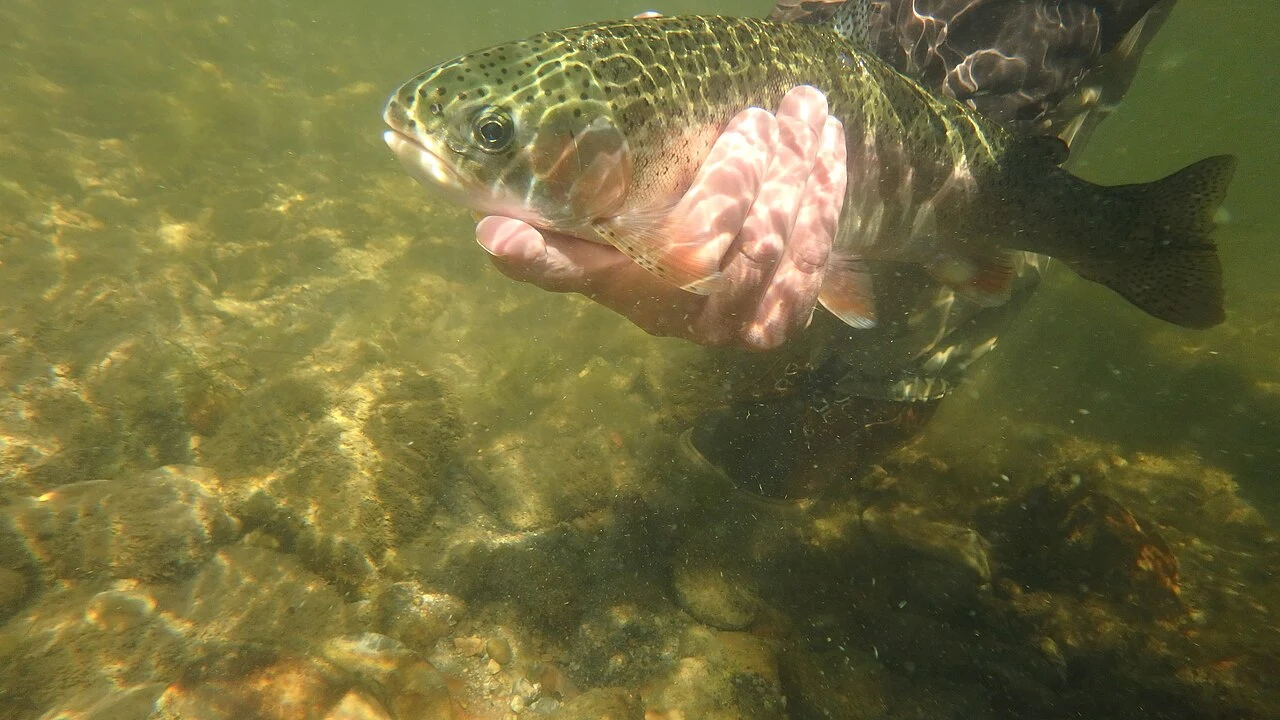
At Turneffe, bonefish and permit are established flats targets; tarpon are another distinct option requiring a separate tackle and handling plan. Bonefish, Albula vulpes in the western Atlantic recreational fishery, are slim silver fish with a pointed snout and a deeply forked tail. Other Albula species exist: do not extend this identification to every fish called bonefish worldwide.
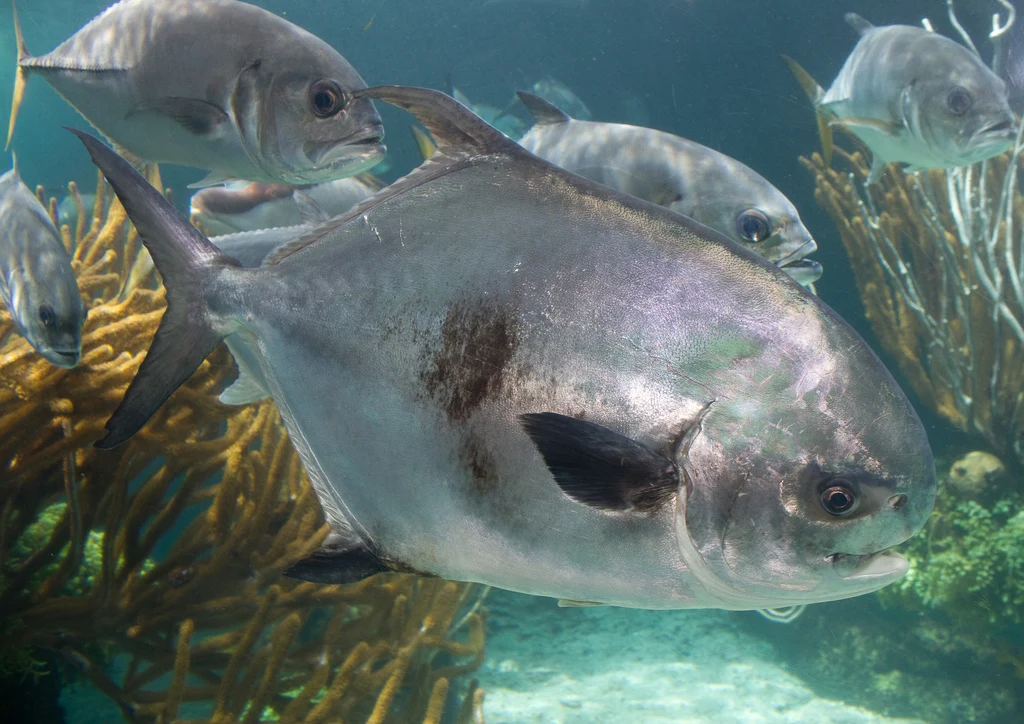
Permit, Trachinotus falcatus, have a much deeper, laterally compressed body. They should not be confused with Florida pompano, Trachinotus carolinus, or treated as large bonefish. The species shown in this guide's cover is permit; the aquarium image is representative, not evidence of a catch at Turneffe or Andros.
Bonefish search shallow sand, seagrass and mixed-bottom flats, often moving between these areas and deeper channels with the tide. Their prey include shrimp, crabs, mollusks and small fish. Research summarized by Bonefish & Tarpon Trust shows meaningful diet differences between the Bahamas and Florida Keys. A Florida prey list is not a precise menu for every Caribbean flat, and adult diets should not be assumed to describe juveniles.
Permit also eat crabs and mollusks. Their feeding makes a controlled, bottom-oriented crab presentation useful to try, but finding a fish and placing the offering without alarming it remain separate problems. For a first guided day, choose a bonefish lesson or a dedicated permit lesson. Pursuing every flats trophy at once makes it harder to learn why a presentation succeeded or failed.
Read a flat as a feeding route
A rising tide may allow fish onto newly covered feeding ground; falling water can draw them toward exits and channels. This is a search framework, not a rule that the same tide always catches fish. Wind, water depth, heat, boat disturbance and visibility can alter the plan. A bright enough sky to see the fish may matter more to your first sight-fishing lesson than a supposed universal dawn bite.
Stand still before wading or casting. Look for a moving shadow, a tail breaking the surface or a small patch of disturbed bottom. Compare the shape with stationary grass and rocks. Position the sun behind you where practical, without casting your own shadow across the fish's route. Ask the guide to explain the bottom: firm sand, soft mud, grass and coral require different footing and fly weight.
| Feature or condition | Fish example | Feeding or holding reason | Method and presentation | Change or caveat |
|---|---|---|---|---|
| Newly covered sand beside grass | Bonefish at Andros or Turneffe | Access to bottom invertebrates | Light shrimp fly ahead of the route; settle, then short strips | Too much weight splashes and digs in |
| Flat draining toward a channel | Bonefish moving off shallow ground | A route between feeding and deeper water | Present across the route from a quiet position | Follow local access and depth changes |
| Mixed bottom with a visible permit | Permit | Opportunity to inspect crab-sized prey | Crab fly to the bottom ahead of the fish; minimal movement | Repeated recasting may spook it |
| Arenal bay with rock, vegetation or fallen timber | Guapote | Shelter and access to smaller fish | Swim a minnow lure along the clear edge | Avoid casting into cover you cannot retrieve from |
Assemble a bonefish fly outfit
A 9 ft 8-weight rod, matching tropical floating line and saltwater reel with backing form a useful starting combination. Check the reel's line and backing capacity with the supplier; a reel number alone does not establish it. A tapered leader around 2.7–3.6 m ending in 12–16 lb tippet is a reasonable trial for manageable open flats. Wind, fish size and abrasive bottom may call for a change.
Connect compatible fly-line and leader loops, then tie on one shrimp imitation, often size 4–8. A lightly weighted pattern suits shallow water and a quiet landing. Add weight only when the fly cannot reach the required level before the fish arrives. The hook should ride clear of the bottom rather than continuously plowing through grass.
An improved clinch is one possible terminal knot for suitable mono: pass the tag through the eye, wrap five to seven times around the standing line, return through the small eye-side loop, then through the larger loop. Moisten, tighten without crossed coils and test before trimming. Have a guide check the assembled outfit before the first opportunity.
Begin with tan or cream over pale sand and compare a darker profile where visibility demands it. These are starting comparisons, not established color laws. Fly size, landing noise and depth often deserve attention before changing color.
Cast ahead of the moving fish, allowing for current and the time the fly takes to sink. A trial lead of one or two metres can start the conversation with your guide; speed, angle and depth can make that much too far or too close. Let the fly settle, then use short line-hand strips with pauses. Keep the rod tip low and remove only enough slack to feel the fly.
When a fish takes and the line tightens, use a controlled line-hand pull rather than instantly lifting the rod. Let loose line clear without wrapping it around fingers or feet as the fish runs. Once it is on the reel, use the drag and a bent rod rather than clamping the spool. Do not pursue a running fish into unsafe footing.
Compare a jig and a permit crab presentation
For a legal conventional-tackle alternative on open flats, discuss a 7 ft medium-light spinning rod, 2500–3000-size reel, 10–15 lb braid and about 0.8–1.2 m of 12–20 lb mono leader. For a double-uni connection, overlap the two lines, form a loop with one tag end and wrap that tag around both lines inside the loop. Repeat with the other tag, moisten, tighten each knot and draw the knots together. Start with six to eight braid wraps and four to five mono wraps, adjusting for the line manufacturer's guidance; pull-test the join before trimming.
A small 2–5 g jig with a size 2–1 hook and a 4–6 cm shrimp-like plastic is a starting option. Thread the plastic straight from its nose, bringing the point centrally out of its back so it does not spin. Cast ahead, allow a short sink and retrieve in small movements close to the bottom. Use the lightest weight that provides control. Reel down and lift firmly when a moving fish loads the line. Where locally permitted, natural shrimp is an alternative to discuss, including bait sourcing and hook choice.
For permit, a 9-weight fly outfit and roughly 3 m leader ending around 16–20 lb can be a practical starting upgrade for a crab imitation, often size 2–6. Match weight to depth, not simply fish size. Use the same line-to-leader and checked terminal connections, but rehearse turning over the heavier fly without striking the rod or yourself.
Place the crab ahead of the fish and let it reach the feeding level. A short movement can attract attention; continued fast stripping can pull it away from a fish inspecting it. Watch for the fish tipping down and the line tightening, then make a controlled strip-set. This is an experiment based on the prey's presentation, not a guarantee that a refusing permit will take. Confirm the day's bait and tackle permissions before switching to natural crab.
Lake Arenal: a different predator and a different search
The freshwater detour is guapote lagunero, Parachromis dovii, often called rainbow bass in fishing tourism. It is a cichlid, not a North American black bass. Guapote is also used for other fishes, including Parachromis managuensis; ask which species the operator means rather than relying on the common name or a colorful photograph.
Published Costa Rican research describes P. dovii around rocky areas, vegetated bays and fallen timber at Arenal, and documents fish prey alongside crustaceans and insects. The 2000 Hule-lake study by Tabash and Guadamuz also found diet differences among sizes and places. Its sampling was at Hule, so it is not a current Arenal feeding report or a basis for copying Hule management proposals into Arenal rules.
A practical lure lesson might use a 2.0–2.2 m medium-heavy rod, a compatible 3000–4000 spinning reel, 20–30 lb braid and 0.6–1 m of 25–40 lb abrasion leader. Match the actual lure mass and fish size to the rod; thicker mono is not bite-proof. Inspect it after every fish or rough contact.
Join the braid and leader with the double-uni connection described above, testing the thicker-line combination. Tie a 7–10 cm shallow-running minnow lure to the leader with a suitable, tested terminal knot, using its supplied attachment or a correctly rated snap. For an alternative, rig an 8–10 cm paddletail straight on a 5–10 g jighead with a roughly 2/0–3/0 hook that leaves the point and gape clear of the body. These are starting experiments for clear retrieval lanes, not instructions to drag exposed hooks through heavy timber.
Cast parallel to the outer edge of cover and retrieve the minnow with short twitches separated by pauses. With the jig, start above the bottom and lengthen the countdown gradually where clear water allows it. A sideways line movement or sudden weight calls for winding out slack and a firm lift. Reduce depth, change angle or use a shallower lure after repeated snags.
Begin with a natural fish-like profile and compare something more visible in stained water. Morning light can make observation comfortable, but the actual wind, clarity and fish response should decide whether to work a shallow edge or a deeper clear lane. Confirm the exact launch and transfer with the operator; an attractive lakeside road is not proof of public access.
Make a Quepos charter a useful lesson
Quepos is a documented Pacific sport-fishing base. Costa Rica's dry season, broadly mid-December through late April, is a planning window rather than a forecast of sailfish, marlin or roosterfish catches. Ask which species and method the crew plans, how far it must run, and what alternative fits your experience.
For a first offshore outing, use the crew's matched rod, reel, leader and bait rig. Before departure, have them demonstrate the hook, leader connection, bait attachment, drag setting and exact response to a bite. A baited circle-hook system requires allowing the line to load rather than making a violent strike. Its hook size, trolling position and speed must fit the actual bait and spread; a generic number copied from a flats outfit is no help. This section is a charter-learning brief, not an independent offshore rigging manual.
Work through a first-day plan
At a flats briefing, rehearse direction calls and ten controlled casts before searching. Use the first hour to identify bottom type and fish routes. After a refusal, change approach or landing distance before changing fly. If the fly repeatedly fouls, reduce its weight or use a clearer lane. If no fish are seen, reassess the tide route and visibility with the guide rather than blind-casting indefinitely.
For an Arenal lesson, compare a rock edge and a timber-edge lane with the same lure, then revisit one with a different depth. Note what changed and what remained uncertain. Keep a second fishing day flexible for repetition, conditions or rest. Confirm Andros airport and lodge transfers individually; the island name alone is not an arrival plan.
Brief permissions and handling notes
Belize's recreational fishing licence is administered through CZMAI; check reserve access separately. For Costa Rica, confirm current INCOPESCA angler, vessel and method requirements and in-water billfish release procedures. Bahamas guidance distinguishes general sport-vessel permits from flats licences and guide/vessel conditions: confirm the exact itinerary through the responsible permit channel. A general vessel exemption does not establish a flats exemption.
Prepare release tools before fishing, keep fish wet and supported, and let trained crews control large billfish or unfamiliar toothy fish. Move if predators repeatedly threaten released fish. Avoid coral, soft unsafe footing and harmful contact with habitat; keep loose line clear of people and wildlife.