A release is a sequence of decisions that starts before the cast. The landing position, hook arrangement, strength of tackle and location of the tools all affect what happens when a fish reaches you. This guide builds a practical routine for ordinary recreational fish, then identifies situations that need species-specific instruction. It does not promise that a released fish will survive.
Decide whether this is a sensible release fishery today
Check the exact water, species and method before leaving home. Some fisheries restrict hooks, handling, retention or targeting even when you intend to release everything. A release plan does not override a closed season. Identify likely accidental catches too; knowing only the target species can leave you unprepared for the fish that actually arrives.
Think about the conditions. Warm, low water can make a trout session inappropriate even if a stretch remains legally open. Coldwater fish such as trout, salmon and steelhead can begin experiencing temperature stress around 68°F, about 20°C; local restrictions and more protective advice take priority. Do not treat that number as a universal permission threshold for every species or river.
If fish repeatedly struggle to recover, stop targeting them and reassess the place, conditions and method. “I release them” is not a reason to continue a process that is clearly going badly.
Assemble a release station
Before fishing, rehearse a landing without a fish. Can you reach the water from stable ground? Can the net be opened with one hand? Will a companion know where to stand? Move to another position if the only plan involves lifting a large fish up a wall or scrambling down a steep bank.
Use tackle capable of bringing the target fish in promptly, a suitable wet knotless or rubber net and accessible dehooking tools. Choose a net that supports the expected fish, rather than one that looks convenient when folded. Never plan to gaff a fish that will be released.
Lay out the practical items:
- Pliers or a dehooker sized for the hooks and likely fish.
- A line cutter reachable without unpacking the bag.
- A supported landing method suited to the bank, boat or pier.
- A measuring device only if identification or regulations make measurement necessary.
- A secured camera already set up, if a photograph is appropriate.
- Any required fishery-specific release equipment, prepared for use.
Agree who controls the rod and who uses the net. Keep spare hooks and other rods out of the landing space. On a boat, the skipper's instructions and stable footing come first.
Reduce the work the fish has to do
Use steady, appropriate pressure and bring a fish within safe control when the opportunity occurs. Do not deliberately allow extra runs to prolong the excitement. Conversely, rushing so hard that hooks tear out or tackle fails is not good handling. A balanced outfit and a functioning drag let you apply controlled pressure.
Keep the net in the water when practical and guide the fish into it. Avoid chasing a fish with repeated swipes. Once it is supported, concentrate on the release sequence instead of immediately lifting it for everyone to see. If the fish can be safely dehooked alongside without netting, that may remove an unnecessary step.
Keep water around the mouth and gills
Limit air exposure, dry-surface contact and handling duration. A wet hand or appropriate net is preferable to a dry towel, sand or a hot deck. Support the body along its length if lifting is unavoidable, and keep the fish low over water so a dropped fish does not hit a hard surface.
Do not grip eyes, insert fingers into gills or squeeze the abdomen. Avoid dangling a fish by its mouth or a lip-gripping device. The way a small bass can be controlled is not permission to handle a trout, large redfish or toothy predator identically. When you do not know a safe species-specific grip, keep the fish supported in the water and use an appropriate tool.
There is no photograph time allowance that makes air exposure harmless. Keep the fish submerged while the camera is prepared; a wet, supported image is often enough. Skip the photograph when conditions or the fish's condition make it a poor choice.
Remove the hook without turning it into an operation
Find the hook's position before using the pliers. Control the lure so free points do not catch your hand or the fish. A single accessible hook is a different task from a swallowed hook or several trebles. Ask for practical instruction with your chosen lures before using them around large or unfamiliar fish.
Cut the line close to a swallowed hook when it cannot be removed easily. Do not continue digging because you want the hook back. Where a lure leaves dangerous exposed points, use suitable cutters and knowledgeable help; avoid improvised surgery. Reconsider the hook arrangement or presentation if deep hooking happens repeatedly.
Barbless hooks can simplify removal, and appropriate circle hooks can help in some bait fisheries. Neither makes every rig suitable everywhere. Confirm the legal configuration and learn how that particular hook is meant to be fished.
Release according to the fish's condition
A fish that remains upright and swims strongly should be allowed to leave. Do not prolong restraint for a recovery ritual when a fish can already swim. If an ordinary fish has lost equilibrium, keep it submerged and gently supported facing suitable current, without squeezing or blocking the gills. Do not move it backward through the water.
Large tuna, billfish and some sharks need specialist handling and recovery procedures. Leave that process to an experienced crew following the relevant fishery guidance. A general bank-fishing article cannot teach safe control of those fish or make their removal from the water appropriate.
Recognize the deep-water exception
A fish brought up from depth may be excessively buoyant because of pressure change. NOAA's rockfish research explains why a fish left floating can be vulnerable even when it is technically back in the sea. Prompt recompression with a suitable descending device can return a fish toward its capture depth; the device must be ready before fishing starts.
Do not puncture a protruding stomach or improvise venting with a knife. Obtain instruction in the approved procedure and equipment for the actual fishery. A deep-water charter should be able to explain its release plan, including how protected or undersized fish are handled. If the necessary equipment and expertise are missing, change the fishing plan.
Choose the response to the problem
The following examples compare decisions, not survival guarantees. A fish swimming away is an observation; delayed injury is not visible from the bank. Do not assign a percentage chance of survival from appearance alone.
| Situation | Preparation that matters | Action at the water | Change before the next cast |
|---|---|---|---|
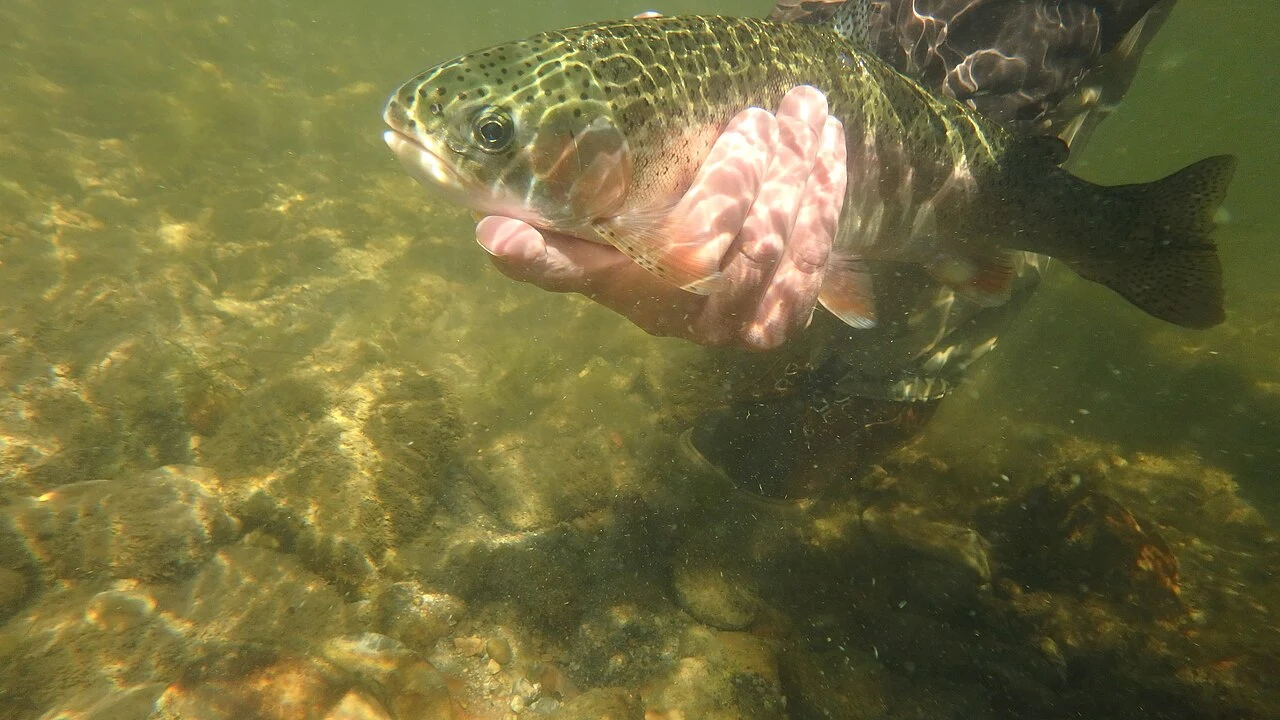
| Small trout on an accessible bank | Wet rubber net and reachable forceps | Keep it supported in water while removing an accessible hook | Move if landing requires dragging across stones |
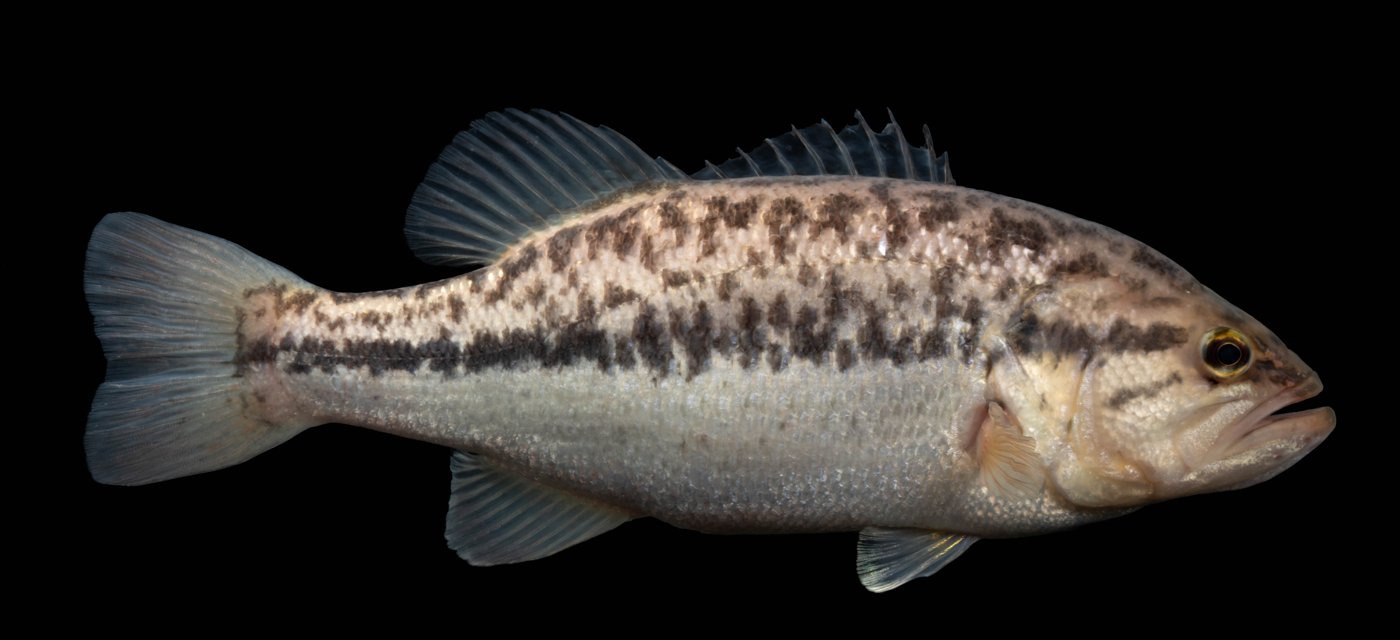
| Bass beside sparse cover | Tackle that controls the fish and a clear netting lane | Support the body rather than levering its jaw | Inspect line where it touched cover |
| Bait-caught fish with a swallowed hook | Cutter already within reach | Cut close rather than digging for the hook | Reconsider bait, hook and delayed bite response |
| West Coast rockfish unable to descend | A suitable descending device ready before fishing | Follow the fishery-specific recompression procedure | Change plans if the equipment or trained help is absent |
| Repeated slow recovery in warm water | Temperature and local closure checks | Stop targeting affected fish | Choose another activity or a suitable different fishery |
Rehearse a complete bank release
For a practical rehearsal, imagine a small trout taken from a firm, low bank. Before casting, open the net, wet it and place the forceps where either hand can reach them. Check that the cutter is not underneath a jacket in the bag. If fishing with a companion, agree that one person controls the rod while the other nets; both reaching for the same fish can create delay and hook injuries.
When the fish approaches, guide it over the submerged net rather than stabbing at it. Lower the rod enough to remove unnecessary line tension once the fish is securely supported. Keep the net in the water while locating the hook. If the hook is visible and accessible, control it with the forceps and reverse its entry path gently. If removal becomes difficult, stop and reassess rather than escalating force. A swallowed hook calls for the cutting decision described above.
Leave the camera unused for this rehearsal. The objective is to complete the sequence with no search for equipment and no unnecessary lift. Let a balanced fish leave when ready; keep an impaired fish gently supported in suitable water without blocking the gills. If the site does not allow that sequence safely, it was the wrong landing station even if the casting was excellent.
Afterward, identify the single delay you can eliminate. Perhaps the net tangled with the lure, or the forceps were clipped where you could not reach them. Correct the arrangement before fishing again. This is an original practice exercise, not a report of a measured release outcome.
Learn from the whole release
Once the fish is gone, reset the tools and inspect the rig. Record the cause of any delay: awkward bank, tangled net, inaccessible cutter, excessive fight or difficult hook placement. Change that cause before another cast. One smooth release is encouraging, but it does not prove long-term survival. The useful goal is to remove avoidable stress at every stage you can control.