Lake Simcoe’s January lake-whitefish fishery rewards preparation more than bravado. The lake is large, its most productive water can be deep, and an ice sheet that is safe in one place may be unsafe a short distance away. A sensible trip therefore begins with current regulations, a conservative ice decision and a compact plan for finding fish rather than with a promise of numbers.
Ontario’s current Fisheries Management Zone 16 summary gives Lake Simcoe and Lake Couchiching a specific lake-whitefish season: January 1 to March 15, then the second Saturday in May to September 30. The listed limit is two fish with a Sport Fishing Licence and one with a Conservation Fishing Licence. Those dates and limits were checked on 25 October 2026, but regulations can change. Reopen the current provincial summary immediately before travelling, make sure the licence category is correct, and check all Lake Simcoe exceptions rather than relying on the general Zone 16 table.
Why January is a useful planning window
The January opener creates a clear legal window, but an open season does not mean dependable ice. Ontario’s ice-safety guidance stresses that ice thickness can vary across a waterbody and that currents, pressure cracks, inflows, springs, snow cover and recent weather can change conditions. Lake Simcoe is broad and exposed. Treat every access point and travel line as a new decision.
The whitefish themselves are usually associated with cool, oxygenated water and bottom-oriented food. On a large lake, that directs an angler toward basin edges, broad flats and changes in depth rather than a random hole. The practical objective is to place a small offering close enough to the bottom to be noticed, then alter cadence or location when the response is poor.
Ontario’s long-term Lake Simcoe monitoring material also matters here. It describes an intensively used fishery and long-running work on the lake’s aquatic community. That is a reason to handle fish carefully and to see a legal limit as a ceiling, not a target.
Access and ice decisions
Choose a recognized access operator or a route supported by fresh local observations. Ask when the exact route was last checked, what type of traffic it supports and whether hazards have been marked. A report about “the lake” is not proof for a particular bay, crack or offshore path.
Carry ice picks on your body, not in a sled. A flotation suit or lifejacket designed for the conditions, a throw line, charged phone in a waterproof pouch and a companion who stays separated during questionable travel all add margin. Tell someone ashore where the party will enter, the intended area and the return time. Avoid river mouths, culverts, narrows, pressure ridges, recently opened cracks and dark or slushy patches. Do not follow tracks merely because someone else crossed first.
Wind is an operational factor as well as a comfort issue. A strong change can open cracks, reduce visibility and make the return harder. Set a turn-around trigger before leaving shore: worsening visibility, moving water on the ice, an unplanned crack, a failed ice check or an access operator’s warning ends the trip.
Finding a starting area
Begin with a lake chart and identify a sequence, not one magic coordinate. A useful sequence is a flat or gentle break near deeper water, a second stop on a contour change, and a final alternative that does not require a risky crossing. Whitefish can roam, so a quiet screen is information rather than failure.
Use a sonar unit where lawful and practical, but interpret it simply. First confirm depth and bottom. Then watch for marks that separate from the bottom or move through the lower part of the water column. If a fish rises to inspect a lure and repeatedly refuses, reduce the movement, change profile or colour, or present a second subtler bait. If there are no observations after a deliberate trial, moving is often more productive than changing lures endlessly in empty water.
Drill only as many holes as the plan requires and keep the area orderly. Mark or guard open holes around children and other users. In extreme cold, remove slush enough to fish cleanly without building an obstacle course.
Tackle and two complementary rigs
A light or medium-light ice rod around 24 to 32 inches gives control inside a shelter and enough backbone for a deep-water fish. A smooth reel and fresh low-stretch main line help transmit a bite at depth. A practical starting range is 6- to 10-pound braided or low-stretch line with a 6- to 10-pound fluorocarbon or clear monofilament leader. The exact choice should reflect lure weight, water clarity and the abrasion risk around the hole.
The first rig is a compact jigging spoon or dense metal lure heavy enough to reach bottom without excessive drift. Common starting weights are roughly 1/4 to 1/2 ounce; in greater depth or current, choose the lightest weight that still gives control. Tip only where bait use is lawful, and keep the profile neat.
The second rig is a small soft-plastic or bare jig in the approximate 1/16- to 1/4-ounce range. It is useful when fish follow an active spoon but will not commit. A short dropper or a change to a quieter horizontal presentation can also work, but avoid complicated rigs that tangle during a deep retrieve.
Ontario’s tackle rules and the Lake Simcoe exception pages should be checked before deciding how many lines to deploy or which hooks and baits to use. Do not infer that a general ice-fishing allowance overrides a water-specific exception. When in doubt, fish one legal line while confirming the rule.
A controlled presentation sequence
Lower the lure to bottom, make brief contact, then lift it slightly clear. Start with two or three short snaps followed by a long pause. The pause matters: a whitefish may inspect a lure after the visible movement stops. If the sonar shows a fish approaching, reduce amplitude rather than continuing to rip the lure.
When a mark follows upward, raise the lure slowly and steadily. That movement can separate an interested fish from the bottom. If the fish stalls, hold still or add a tiny quiver. If it drops away, return close to bottom and reset rather than chasing it all over the screen.
Without sonar, use time and depth discipline. Fish each level for a defined period, note any taps or changes in line tension, then move to the next planned hole. A bite at depth may feel like extra weight or a lure that does not fall normally. Reel down and make a firm, controlled lift rather than a violent strike.
Landing and release
Deep water creates two handling concerns: a long fight and possible barotrauma. Use tackle that can bring a fish upward steadily. Clear the hole before the fish arrives, guide its head into the opening, and lift without forcing the line against sharp ice.
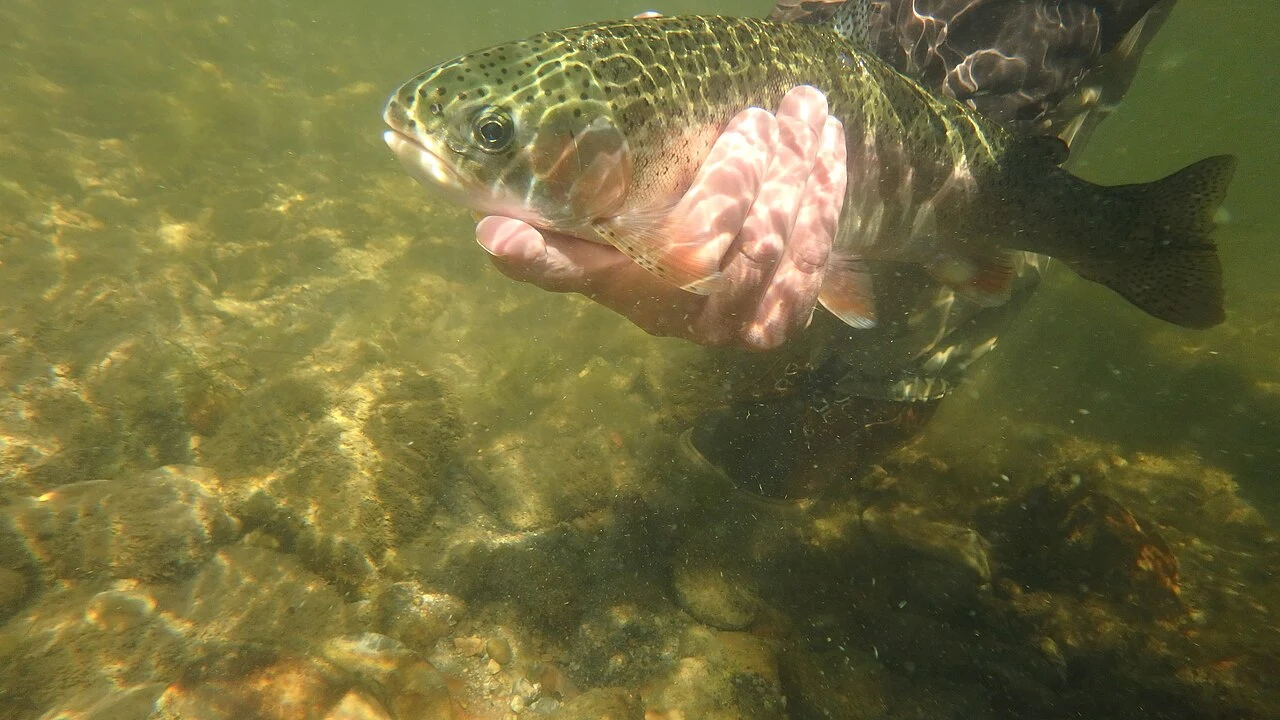
Prepare the camera and tools before removing a fish. Wet gloves reduce damage to the protective slime. Support the body horizontally, keep the gills out of contact with snow and ice, and minimize air exposure. If releasing a fish, return it promptly and watch that it can swim down. A fish showing barotrauma or poor recovery should not be repeatedly lifted for photographs. Follow any current provincial guidance and do not attempt improvised release devices unless their use is lawful and understood.
Harvest only a fish that is lawful, wanted and likely to be used. Bleed and chill retained fish promptly and keep each angler’s catch identifiable. The licence limit is not a group pool.
Common mistakes
The most serious error is letting the fishing plan outrank the ice plan. A waypoint, social-media report or line of huts does not establish safe travel. Another mistake is staying stationary because the shelter is comfortable. Whitefish move; a disciplined relocation may be the best adjustment.
Overworking a spoon is also common. Aggressive movement can attract attention, but the take often comes during a pause or controlled rise. Heavy line, bulky swivels and an untidy bait can reduce response in clear water. At the other extreme, tackle that is too light prolongs the fight and complicates landing.
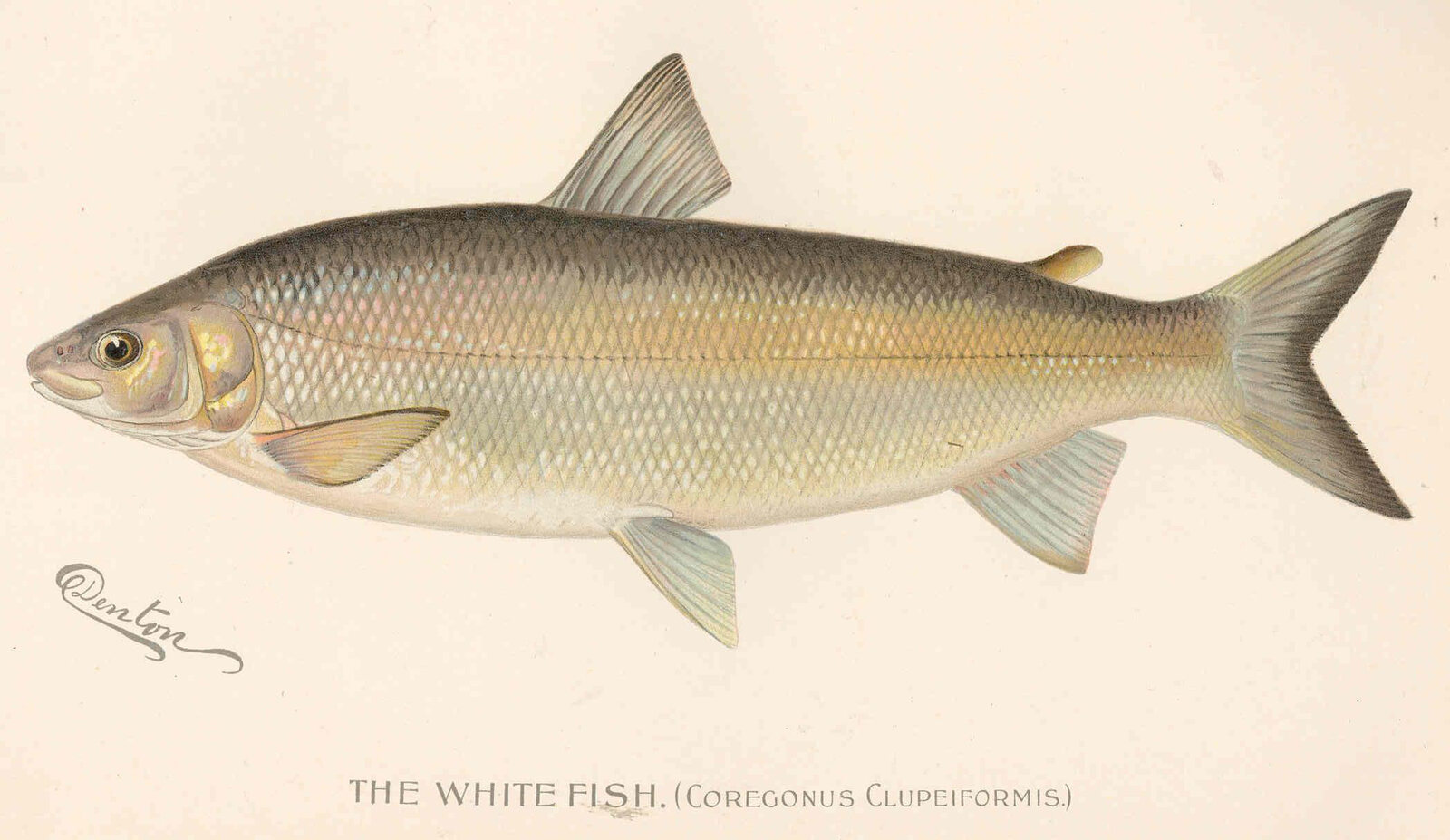
Finally, do not confuse a species illustration or a remembered field mark with identification in hand. Lake whitefish have a long, silvery body and a forked tail, but Lake Simcoe also contains other salmonids and cisco. Use current Ontario identification resources, and release an uncertain fish immediately if keeping it could breach a rule.
A realistic day plan
The evening before, reopen the Zone 16 and Lake Simcoe exception pages, confirm licence and bait rules, check the weather, and obtain an access update for the exact route. Pack two simple lure families, spare leaders, ice picks, flotation, navigation, a throw line, dry gloves and a warm drink.
At daylight, reassess the entrance and agree on the turn-around triggers. Fish the first mapped depth change with an active spoon, then show a quieter jig to observed followers. If the area is blank, move only along the verified route to the second stop. Keep a written or electronic note of depth, bottom contact, fish response and lure cadence.
Leave enough light and energy for the return. A successful January outing is one that follows the current rules, avoids marginal ice, gathers useful information and brings every person home safely. A legal whitefish is a bonus, not the measure of whether the plan worked.