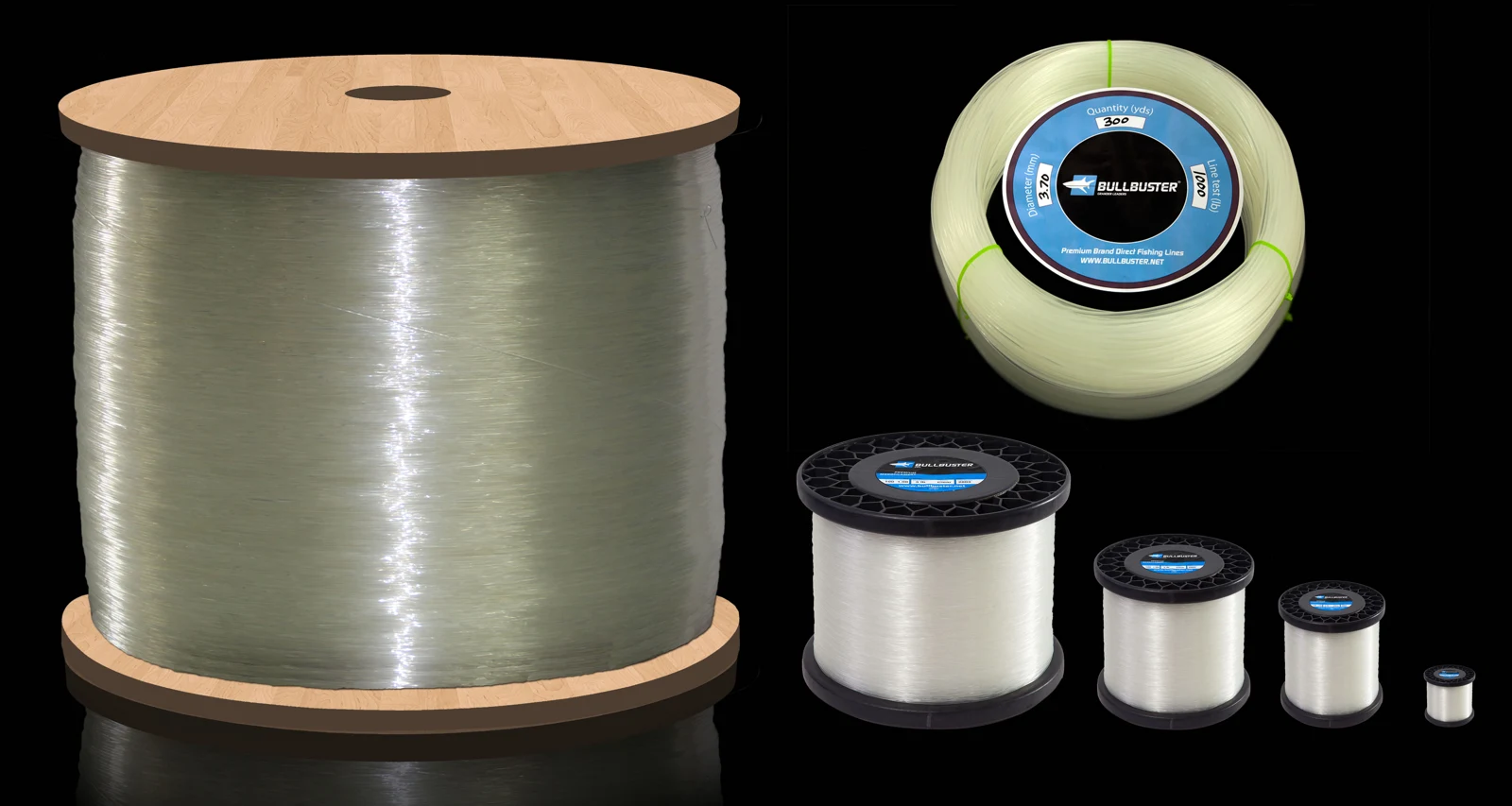
Fishing line is part of a system: rod, reel, knots, hook, lure and the cover you fish around. A stronger label does not automatically produce a better outfit. Start by describing the job, then choose a material and diameter you can cast, control and connect reliably. The examples below are starting arrangements for ordinary freshwater fishing; heavy cover, large fish and specialized saltwater methods require a different assessment.
Understand what you are buying
Nylon monofilament is a single strand. Braided lines combine fibers; fused superlines are a related product category with different construction. Fluorocarbon can be sold as a casting main line or as a comparatively stiff leader. A fluorocarbon-coated nylon product is not the same material as 100-percent fluorocarbon. Read the actual label rather than choosing by the largest word on the box.
Nylon provides cushioning stretch, braid offers comparatively thin diameter and low stretch, and fluorocarbon tends to sink. Treat claims about invisibility or universal abrasion superiority cautiously: presentation, lighting, diameter, formulation and the actual abrasive surface matter. Fluorocarbon is not literally invisible, and no line is proof against sharp teeth or damaged guides.
Breaking strength is one specification. Record diameter in millimetres, spool length, material and intended application too. Two products marked 10 lb can handle differently and occupy different amounts of spool space. A reel capacity printed for nylon cannot simply be interpreted as the same length of any braid carrying that strength label.
Three examples that explain the choices
For learning with small lures on open freshwater, consider a light spinning outfit rated for the lure and about 4–6 lb nylon. Keeping one material from reel to lure removes a joining knot and makes it easier to diagnose problems. Choose the stronger end or another outfit when fish size, current or cover warrants it; this is not a plan for pulling large fish out of vegetation.
For a general bass spinning outfit fishing sparse cover, an illustrative combination is 10–15 lb braid with a short 8–12 lb nylon or fluorocarbon leader. The braid offers contact and manageable diameter; the leader puts a separate, replaceable section near the lure. Check both against the rod, the hook and the expected obstacles. Do not copy these ratings into dense timber and assume the outfit has become heavy tackle.
For a floating lure, start by testing how a nylon connection behaves beside the bank. A long, sinking leader can change the attitude of a small surface lure. If that spoils the intended action, change the connection or shorten it rather than blaming the lure. Compare the same cast and retrieve before deciding the alteration helped.
These examples illustrate decisions, not a requirement to buy three outfits. A well-maintained nylon setup can teach casting, depth control and bite recognition before a second material is necessary.
Give a leader a defined job
Write down why you want one: a replaceable abrasion section, a different presentation near the fish, or a fishery-specific connection. A leader around 60–100 cm is a manageable practice length for many short-cast spinning situations, provided its knot stays outside the rod tip before the cast. Longer leaders can be useful, but the joining knot must pass the guides cleanly.
A leader is not automatically tooth protection. When targeting pike or another species capable of cutting ordinary line, select an appropriate bite-resistant trace and compatible fittings. Learn that fishery's rig from a competent local source before casting. Increasing ordinary nylon by an arbitrary amount does not establish that the bite problem is solved.
Make the complete rig no heavier than necessary for its job, but do not reduce leader strength merely because the water is clear. Landing a fish promptly and controlling it around obstacles are also requirements.
Learn two connections well
For a nylon terminal connection, the improved clinch is a useful practice knot. Pass the tag through the eye, wrap it around the standing line five to seven times, return through the small opening beside the eye and then through the larger loop just formed. Moisten the knot, draw it down gradually and trim only after it is seated and tested. Keep the wraps orderly; an omitted pass produces a different knot.
For braid, follow the line manufacturer's recommended terminal knot and instructions. For a Palomar where recommended, double roughly 15 cm/6 in of line, pass the loop through the eye and tie a loose overhand knot with the doubled section. Pass the hanging loop completely over the hook or lure, then moisten and draw the knot down evenly. Ensure the loop clears every hook point and no line is trapped around the lure. Inspect and pull-test before trimming; crossed or pinched strands need retying. A long multi-hook lure can make this awkward, so practise with a protected hook and follow the line maker's preferred alternative if needed. For braid-to-leader connections, learn one suitable joining knot with the actual diameters. A complicated knot you cannot inspect is a poor upgrade over a simpler connection you can tie correctly.
Practice with an unhooked ring or protected hook at a table. Moisten nylon or fluorocarbon connections before drawing them down, seat them gradually, inspect the wraps and test under controlled tension. Keep hooks away from eyes and hands. Never wrap braid around bare fingers to test a knot or pull free a snag.
Spool and set up deliberately
Use the reel maker's filling instructions, including backing requirements and the correct fill level. Excess line can jump off a spinning spool; too little can reduce useful casting performance. Keep sensible tension while filling and avoid loading a twisted line onto the reel. Ask the shop to demonstrate if you have not done it before.
Close a spinning reel's bail by hand after the cast and check that the line sits on the roller before retrieving. Do not wind a loose loop tightly onto the spool. If a lure spins instead of swimming as intended, correct its rigging or use an appropriate swivel where the method calls for one; otherwise repeated retrieves can compound twist.
Set drag for the weakest practical part of the system, including knots, hook strength and rod limits. Check it before fishing with a controlled pull rather than locking it down because the braid label is high. Never point a bent rod vertically overhead to force a fish closer.
Compare materials by the presentation problem
The table summarizes starting decisions for modest freshwater lure fishing. Product formulation and diameter still matter; it is not a ranking of brands or a promise that a particular material will catch more fish.
| Fishing job | Material to consider | Why it may fit | What to check first |
|---|---|---|---|
| Learning short casts in open water | Supple nylon main line | One material avoids a joining knot and provides cushioning | Diameter, spool fill and lure rating |
| Feeling a small lure through manageable current | Braid with a suitable leader | Low stretch helps transmit changes in tension | Slack control and the complete connection |
| Keeping a small surface lure behaving correctly | Nylon near the lure | Compare its action against a longer sinking leader | Test beside the bank before casting far |
| Replacing an abraded working end | Suitable nylon or fluorocarbon leader | A separate section can be renewed without replacing all main line | Actual wear and knot compatibility |
| Fishing for toothy species | Fishery-appropriate bite-resistant trace | Ordinary leader material may be cut | Local rig guidance, fittings and lure action |
A named species does not choose the line for you. A locally confirmed largemouth bass in open water and one beside dense timber present different landing problems. A trout stream with sharp rock can damage a light leader even if the fish are small. These are examples of assessing obstacles, not recommendations to apply the example breaking strains everywhere those fish occur.
Test one complete outfit before buying another spool
Use a short practice session in unobstructed water with a lure the rod is rated to cast. Start with short casts and inspect the spool after each one. If loops appear immediately, stop and solve the filling or slack problem before lengthening the cast. Changing material while leaving an overfilled spool may simply reproduce the difficulty at greater cost.
Next, swim the lure close enough to watch its action. Compare a shorter and longer leader only if you can tie and inspect the connection properly. Record whether the lure runs straight, whether fittings overwhelm it and whether the knot catches the guides. Those are observable outcomes. A quiet practice session cannot establish whether a fish finds one material less visible.
At home, practise the actual knot with the actual line diameters. Watch a correct demonstration and repeat the full sequence; copying a name from a package is not the same as mastering the knot. Use a protected eye or training ring, keep hands clear and inspect each attempt. Discard visibly damaged line rather than trying to recover it through a stronger knot.
Retest after replacing a spool or changing leader diameter. A familiar knot can dress differently in a stiffer material. Keep the successful setup written down so the next change answers a specific problem instead of starting the comparison again.
Troubleshoot the symptom
- Coils spilling from a spinning spool: check overfilling, twist and whether the chosen line is too stiff for the spool.
- Repeated failures at the knot: inspect the tying sequence, eye finish and how the knot was tightened.
- Breakage away from the knot: check the line, guides and recent contact with rocks or timber.
- Poor lure action: check leader stiffness, knots, fittings and whether the lure is rigged straight.
- Loose loops after casting: manage slack before winding and avoid continuing to cast over an existing tangle.
After a fish, snag or contact with rough cover, inspect the working end and replace damaged line. Label every reel or spare spool so you know what is actually fitted. Keep cut line in a closed container and use a suitable local disposal or recycling route. The goal is a repeatable connection from your hand to the lure, with a clear reason for every component.