A fishing journey works best when the place, season, method and people fit together. Begin with the experience you want to learn, then test whether the practical itinerary supports it. The most famous destination is not automatically the best classroom for your available dates, budget or companions.
This guide provides an original planning method and an illustrative itinerary. It does not quote current package prices or promise catches. Use the relevant fisheries authority, land manager, operator and transport provider for the exact decisions your trip requires.
Write a brief before comparing destinations
Use one sentence with a purpose and a constraint. For example: I want two days of beginner-friendly inshore fishing within a five-night family holiday, with no transfer longer than an hour each way. Another angler might want three days of river casting instruction from one base. Those briefs lead to different choices even if both travelers initially say they want a fishing holiday.
List essentials separately from preferences. Essential might mean accessible boarding, a guide who teaches in your language or a legal opportunity for the target species during your dates. A preferred hotel view is easier to change than those requirements. Decide what would make the trip worthwhile even if weather removed one fishing day.
Compare three kinds of evidence
A destination page describes the possibilities. A seasonal guide describes a recurring pattern. A recent local report describes a limited period and place. None guarantees conditions on your dates. Ask when photographs were taken, which port or water was used and whether the method suits a visitor with your experience.
Use the official fishery rules to establish whether the opportunity is legal, then ask a competent local operator whether it is realistic. Species presence, legal season, accessible water and fish willing to feed are different questions. Do not treat a general regional peak month as a booking guarantee.
If dates are fixed, choose the fishery around those dates. If one species is essential, be prepared to change dates or destination. Trying to hold every variable fixed often leads to spending more on a trip with less chance of meeting the original brief.
Compare complete days, not headline prices
For each option, write the accommodation-to-meeting-point journey, departure time, time on the water, estimated fishing time, return and any evening transfer. A long offshore run may be central to the experience, but it should not surprise someone expecting six hours of casting.
Ask how a shared charter rotates anglers, how many guides are present and whether tackle demonstrations are included. A private boat does not automatically mean individual coaching; a group lesson may provide more structured teaching. Compare what you will actually do.
Check access and practical comfort. Ask about toilets, shade, seating, boarding steps, walking distances and what happens if someone wants to stop early. State needs clearly before paying. An operator cannot reasonably plan for limitations that have not been discussed.
Build a budget that reveals tradeoffs
- Travel to the destination, including extra baggage and rod transport.
- Accommodation and the cost of reaching the departure point.
- Fishing days, guiding, boat hire and any equipment rental.
- Licences, permits and lawful access fees where required.
- Bait, replacement tackle, meals and drinks not included.
- Transfers, fuel, parking and any companion activities.
- Insurance appropriate to the booked activities and an allowance for changes.
Use actual quotes in the relevant currency and date them. Keep per-person costs separate from per-boat costs. An inexpensive charter can become the expensive option after a remote transfer and an additional hotel night. Conversely, supplied equipment can remove baggage and purchase costs that initially seemed unavoidable.
Choose a personal contingency based on the trip's flexibility rather than copying a universal percentage. Identify what would happen if an extra night, replacement transport or a cancelled day changed the plan. Avoid building a budget that only works if every connection and outing succeeds exactly as hoped.
Get the booking answers in writing
Ask who guides the outing and whether substitution is possible. Confirm the boat or venue, participant limit, methods, inclusions, deposit, balance date and cancellation terms. Establish who decides a weather cancellation, whether a refund or credit applies and how a shorter trip is handled.
Ask what happens when the target fishery becomes unavailable through a closure or unsuitable conditions. A substitute species or venue may be enjoyable, but it should be a choice you understand beforehand. Keep the written confirmation with the trip sheet, not scattered across several message threads.
Verify that the operator and any necessary vessel or guide permissions meet local requirements through the responsible local channels. Do not infer authorization from a polished website or social-media following. Use payment arrangements whose terms you understand and retain receipts.
Work through an example itinerary
For an illustrative five-night trip, arrival day is for travel, checking in and meeting arrangements. The next morning is a guided learning session, followed by time to review the tackle and notes. A second day can be reserved for a companion activity or a short independent session at a suitable permitted venue.
Place the second guided outing before the final day, leaving a possible rescheduling window. The last full day remains flexible for a weather change or an activity everyone would enjoy. Departure day stays free of fishing commitments that depend on a perfect return time.
This sequence is a planning example, not a requirement. Some destinations need more travel and fewer fishing days. A remote expedition may have little flexibility at all; that makes clear cancellation terms and realistic expectations more valuable.
Make the backup enjoyable
Choose a non-fishing alternative before departure: a harbor walk, museum, local food experience or scenic day that fits your companions. It should be something you want to do, not an afterthought selected in frustration. A genuine alternative reduces the pressure to accept an unsuitable outing simply because the holiday has been expensive.
Check the local weather service and official warnings as departure approaches. Plan the weather decision ashore; thunderstorms can develop rapidly over the water. Apply current local forecasts and the operator's safety decision at the actual destination.
Choose the learning environment with a comparison table
Before selecting an operator, compare the sort of fishing day you want. These are illustrative choices rather than destination recommendations. A sheltered venue can still be unsuitable in poor conditions, and the existence of a public pier does not establish fishing permission.
| Trip style | What you could learn | Detail to confirm | Main planning tradeoff |
|---|---|---|---|
| Guided inshore lure session | Casting lanes, depth and retrieve control | Will each guest actively cast and receive feedback? | Wind and boat position may limit practice |
| River-bank lesson | Reading seams, pools and reachable cover | Walking distance, access and permitted methods | Water level can change usable banks |
| Pier or harbor bait session | Bait presentation and bite recognition | Landing method, crowding and local restrictions | High walls may complicate release |
| Offshore trolling charter | Spread layout and teamwork | Who handles rods and how anglers rotate? | Travel time may dominate the day |
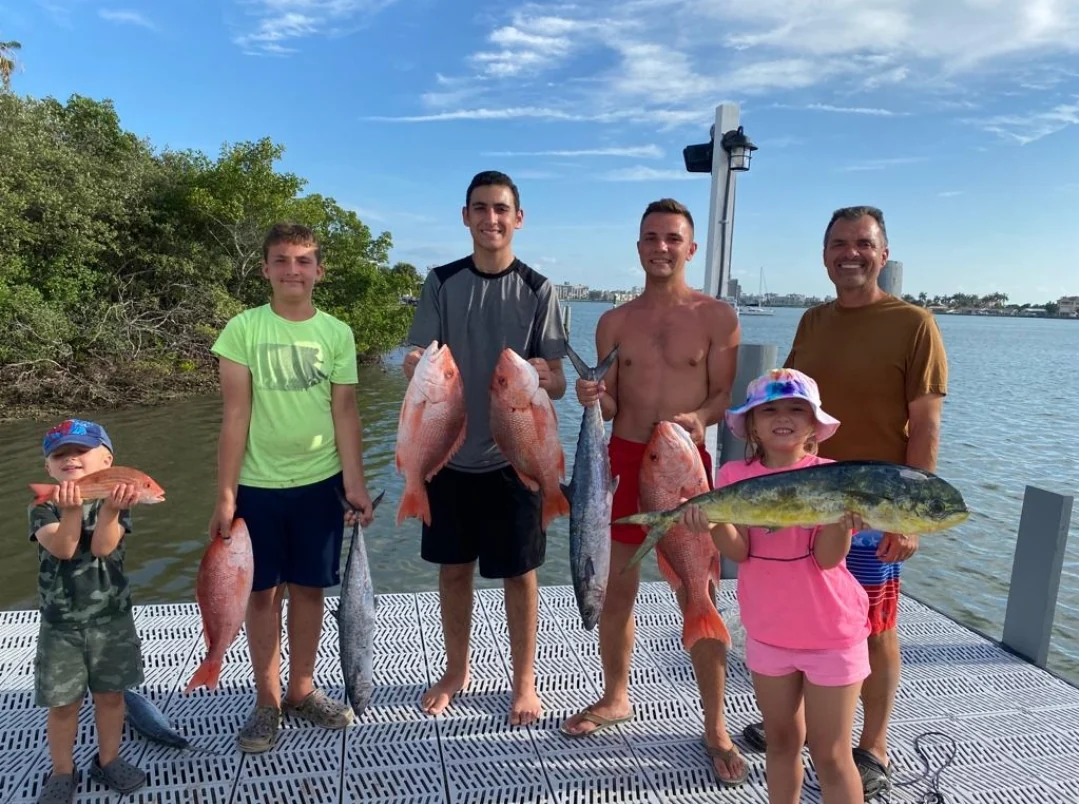
A hypothetical family visiting coastal Florida might prefer two short inshore lessons over one long offshore day because active casting is the stated goal. Another family may value seeing offshore wildlife and learning a crew-based method. Neither is inherently better. Compare the actual activity and the time available to each participant.
For a river trip, ask the guide how the lesson changes if the water becomes high or colored. A useful answer describes a different permitted venue, a revised teaching plan or cancellation. A vague promise to find fish does not explain the substitute experience. For either trip, ask what local forage and structure the teaching will cover so the day develops understanding rather than merely a catch photograph.
Turn a booking into a usable lesson
Put one demonstrable skill into the brief. For an inshore lure lesson, ask to assemble the actual rig yourself: fit the reel, identify line and leader strengths, tie the connection, match hook and jighead to the plastic, and check that it swims straight. Ask the guide to explain why the head weight suits that depth and current, then show the casting angle, sink count and retrieve. Record those details with their units. A list of lure brands is not an adequate substitute for a repeatable method.
Ask for an alternative that addresses a real condition. If wind prevents control of a light lure, will the lesson move to a sheltered station, use a compatible heavier head, or switch to a legal float-bait presentation? If the first lane produces no bites, ask what observation prompts a depth change and what prompts a move. The purpose is to learn the decision as well as the rig.
For the two-lesson family itinerary, use the first session to build and fish one setup. Between sessions, practise the knot with a safe training ring and write down what remains unclear. Use the second session to repeat the same method at another suitable feature and compare the result. Choose actual hook sizes, weights and leaders with the guide for the target and cover; this planning example deliberately does not prescribe a generic rig for every destination.
Audit the plan at three decision points
Before paying, confirm the essential access, instruction and cancellation terms. A month before travel, check equipment and transport arrangements and identify the official sources you will consult again. Shortly before each outing, review current weather and rules with the operator. These stages answer different questions; an early seasonal description cannot settle a same-day safety decision.
New Zealand's Check, Clean, Dry guidance provides a concrete reminder that moving equipment between waters is part of the itinerary. If a hypothetical trip changes freshwater venues on successive mornings, allow cleaning and drying time or ask about suitable locally supplied equipment. Do not assume an airport declaration completes the separate obligation to prevent spread between waters.
Write one sentence explaining the booking decision: selected for two hours of supervised casting, short transfers and a flexible weather alternative. That sentence helps you evaluate a proposed substitution. If the changed trip no longer meets the purpose, discuss the agreed options rather than accepting it merely because it is already on the calendar.
Use a final check, then allow room to learn
Reconfirm the meeting location, time, contact number, equipment list and transport. Verify current rules and access for the exact waters. Check each transport provider's current baggage conditions, and prepare clean equipment for the destination's biosecurity process.
Tell someone your day's plan and expected return. On the outing, ask why a guide chooses a position or method rather than concentrating only on the next bite. At the end, record one lesson and one question. The most useful souvenir may be an approach you can apply at home, long after the itinerary and catch photographs have faded.