A useful first New Zealand freshwater trip starts with one base and a method you can repeat. Leave enough time to learn why a trout holds in a particular current lane, assemble the rig correctly and return with a deliberate adjustment. This is a trip-planning guide with a worked central North Island example, not a claim that the same outfit or rules fit every New Zealand river.
Choose a base around the fishing lesson
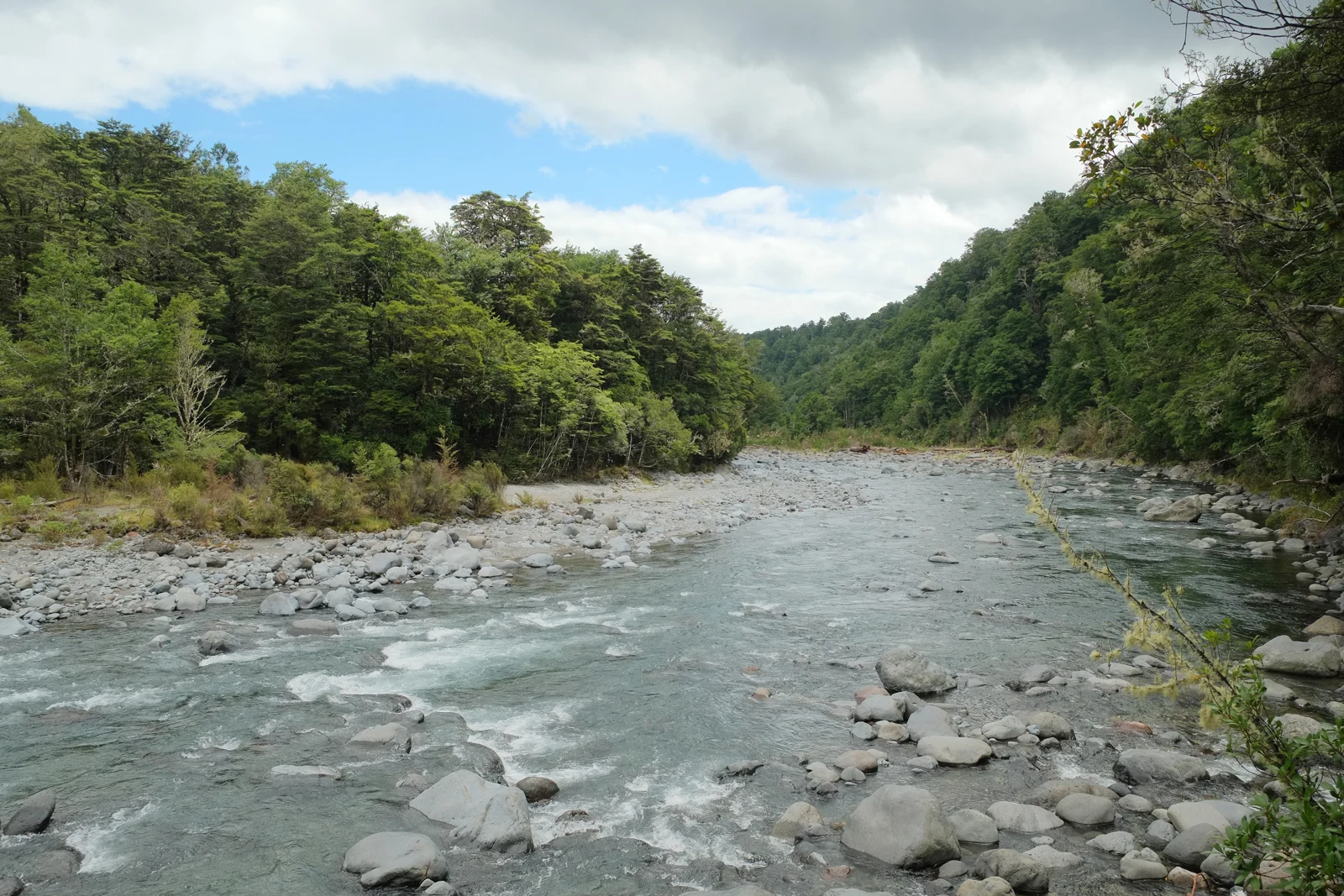
Decide whether you want a guided river lesson, independent lake-bank sessions or a demanding backcountry walk. For a newcomer, a base around Tūrangi gives a concrete example: the Tongariro's middle river between the State Highway 1 bridge and Red Hut has established pools, parking, tracks and footbridges. Confirm current track conditions and the exact meeting point before booking. Access infrastructure does not make every pool or crossing safe.
The lower river includes slower pools used by brown trout; upstream water becomes more broken and bouldery. Treat those as different fishing problems. A beginner can learn line control on an accessible run without pursuing the most remote water. Avoid planning to walk onto the unstable pumice river-mouth delta. A lake alternative is useful, but a large exposed lake is not automatically the safe option when a river floods.
For another region, repeat the same process with its Fish & Game access information: identify the fishery, an actual legal entrance, a suitable method and a weather alternative. Do not infer access across private land from a roadside view or a parked vehicle. A three-day trip spent learning one catchment can teach more than driving between both islands.
Identify trout and their food
Rainbow trout, Oncorhynchus mykiss, and brown trout, Salmo trutta, are introduced species. Rainbows are especially important in central North Island lakes and tributaries and also occur in eastern Southern Alps lakes. Browns are widespread south of Auckland. Those distributions do not establish that every nearby water contains both.
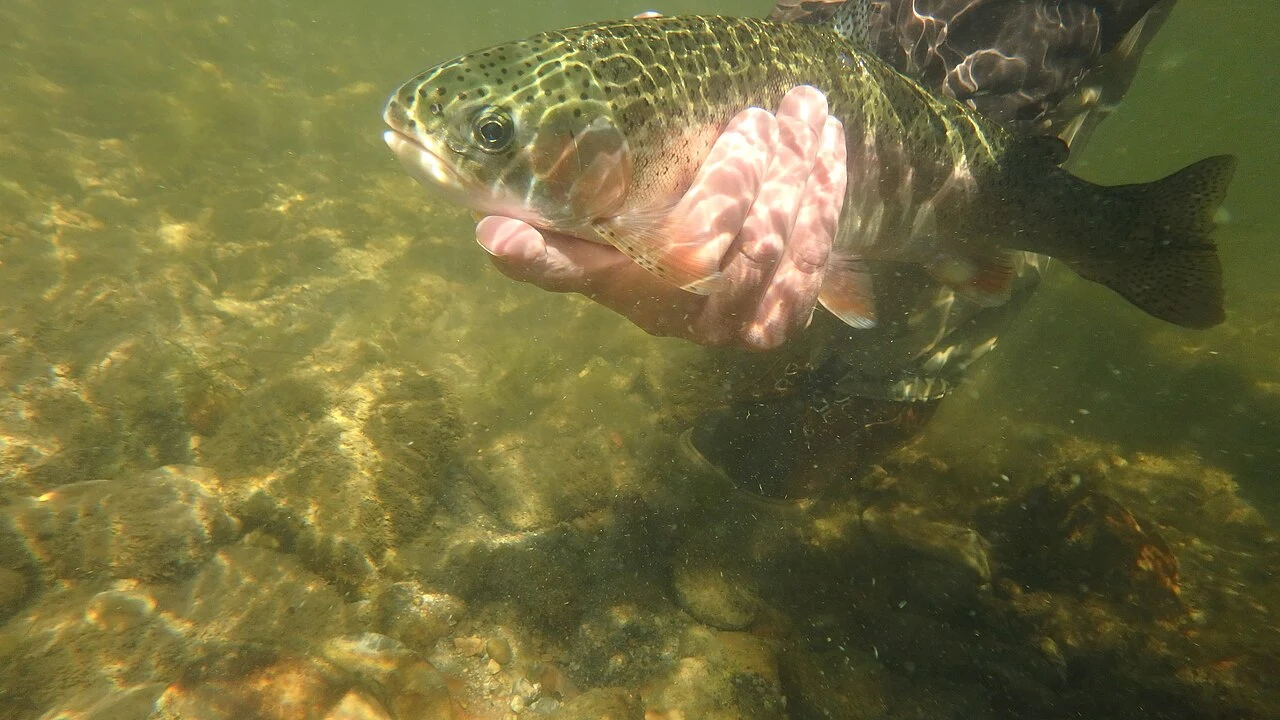
Rainbows commonly have numerous dark tail spots and may show a pink side band; browns often have haloed dark or reddish body spots with few tail spots. Lake fish can look much more silver than river fish. Use a complete identification guide when uncertain rather than relying on color alone, particularly with small fish or other salmonids.
The food changes with habitat. In Lake Taupō, rainbow trout pursue smelt schools; early-summer movements of smelt toward shallower spawning areas can bring feeding trout closer to shore. River fish encounter aquatic insects and, in summer, terrestrial insects such as cicadas. A nymph imitates a submerged food item; a dry fly addresses surface feeding; a streamer offers a moving profile. Choosing among them begins with what the water and fish show, not the largest fly selection.
Winter and spring river runs include migrating rainbows, while summer can offer surface-feeding browns and recovering rainbows. This is a seasonal framework, not a guaranteed bite calendar. Observe rising fish, insect activity, water clarity and the strength of current before choosing the first presentation.
Match a feature to a method
The following are illustrative choices for the Taupō area. Depths and weights need adjustment on the day; these are not observations of today's conditions.
| Place or feature | Likely example | Food or holding reason | Starting method and presentation | Limitation |
|---|---|---|---|---|
| Tongariro pool-side seam | Rainbow trout | Reduced effort beside a drifting-food lane | Nymph upstream into the seam and control slack | Deep fast water may exceed beginner control |
| Slower lower-river pool | Brown trout | Holding water with surface feeding opportunities | Dry fly to a visible rise, allowing a free drift | Absence of rises is reason to reassess depth |
| Broken run with a clear downstream lane | Trout using the run | Moving fly crosses potential holding positions | Swing a wet fly across and downstream | Sinking tackle can snag or foul-hook if uncontrolled |
| Legal Lake Taupō beach or rocky shore outside fly-only areas | Rainbow or brown trout | Mobile feeding fish, sometimes following smelt | Fan a small spoon through repeatable depth bands | A long cast cannot reach every offshore school |
From the bank, look at the near margin before entering the water. Next examine the seam, the pool's deeper edge and the tail. A seam is a boundary between different speeds; an eddy reverses flow and can make the fly move unnaturally if the line remains in the main current. Work one manageable lane before adding distance. Wading farther often makes a beginner's drift harder to control.
Assemble a river nymph outfit
A 9 ft 7-weight fly rod, matching floating weight-forward line and appropriately sized reel are a reasonable broad Taupō starting outfit. An 8-weight better handles heavier Tongariro rigs and wind; a 5-weight may suit lighter summer dry-fly work. These are alternatives, not a requirement to buy three rods. Ask a guide to supply a balanced outfit for the lesson.
For a manageable shallow-to-moderate run, start with roughly 2.7–3.6 m of tapered leader ending in about 6–10 lb tippet. Those are practical starting suggestions, not official specifications. Use enough strength to control the fish and turn over the fly. Attach the leader to the fly line with compatible loops and inspect that the loops seat without cutting across one another.
Tie on one weighted nymph, perhaps a size 12–14 hare-and-copper or pheasant-tail pattern, and attach a small yarn indicator above it. A single fly is easier to cast and untangle while learning. Increase depth by moving the indicator farther from the fly, or use a heavier fly when the current prevents it reaching the chosen lane. Change one variable at a time.
A local tandem alternative uses a heavier size 10 nymph, sometimes with a 4 mm tungsten bead, followed by a lighter size 12–16 fly on about 30 cm of tippet tied to the first hook's bend. This can reach deeper water but increases tangles and casting risk. Learn it with a guide after controlling a single fly. Use the fly rod's casting stroke, not the weight as a projectile; do not add a float to a fly-only rig.
For an improved clinch at a fly, pass the tag through the eye, wrap it five to seven times around the standing line, then pass it through the small loop beside the eye and the larger loop just formed. Moisten and tighten neatly, check for overlapping coils and pull-test it. Trim the tag only after testing.
Fish the drift instead of merely watching the indicator
Make a short cast upstream and slightly across the selected lane. Let the nymph sink while gathering enough slack to remain connected. Lift and reposition the floating line when faster surface current begins pulling it ahead of the indicator; this adjustment is a mend. Keep it small enough that it does not jerk the fly out of position.
A sudden pause, sideways movement or dip can mean a fish or the bottom. Lift the rod promptly but smoothly while controlling loose line with the other hand. If there is no fish, lower and recast without repeatedly snapping the rig overhead. Eye protection and space behind the cast matter with weighted flies.
Occasional bottom contact can help diagnose depth, but constant snagging is not successful presentation. Shorten the indicator-to-fly distance, reduce weight or shift to a clearer lane. If every drift races through without contact, try a slightly longer sinking interval or a deeper setup. If several clean drifts show nothing, cover another lane before changing fly color.
Compare a dry fly, wet fly and lake lure
When fish rise repeatedly, simplify to a single dry fly, commonly size 10–16, on a floating line and a tapered leader around 2.7–3.6 m. A 4–6 lb terminal section is a possible starting point for smaller flies in open water, increased when fish size or snags demand it. Remove the weighted nymph and indicator. Put the fly upstream of the rise with enough slack for it to travel at the surface current's speed. Lift gently after the fish takes and turns rather than striking at the first splash.
For a wet-fly alternative, a size 6–10 woolly bugger on roughly 1–1.5 m of 8–12 lb leader behind a properly matched sinking tip or head is a starting setup. Choose the sinking component within the rod maker's rating and with local guidance. Cast across and slightly downstream, allow a short settling interval, then let current swing the fly while maintaining contact. Alter angle and sinking time before adding speed; let a tightening take load the rod, then lift steadily.
For permitted lake spinning, a 7 ft light-to-medium rod, 2500-size reel and 6–8 lb mono can start with a 5–10 g spoon fitted with a suitable single hook. Tie directly or use 60–90 cm of comparable leader when replacing worn terminal line. Cast a fan from short to long, count briefly, then retrieve steadily enough for the spoon to work without spinning. Compare a shallow pass with a longer count only where the bottom is clear. Natural bait is not an option in the Taupō district.
Natural browns or olive nymphs, a visible dry-fly silhouette and silver or darker streamer/lure profiles are sensible comparisons, not color laws. In murky water, test whether you can see and control the presentation nearby. Low light may help a cautious approach, while a midday insect hatch can outweigh a generic dawn rule.
A worked first trip
Use arrival day to confirm access, outfit fit and the weather alternative. Book a guided second day around learning one short drift, detecting a take and landing a fish. Ask the guide to explain why the fly's depth or weight changed, not simply to hand over a productive rod.
On the third day, repeat the method at an appropriate accessible spot. Spend ten minutes observing, then compare three lanes with the same rig. After twenty to thirty minutes without useful signs, check depth, drag and disturbance before substituting a fly. If fish rise, switch to the dry-fly lesson; if the river is unsuitable, choose a genuinely fishable alternative or rest.
Keep a fourth day flexible rather than booking an immovable remote expedition. Reserve departure time for cleaning and drying equipment. Record the feature, rig, drift and adjustment even when no fish is caught. This is a worked learning plan, not a catch forecast.
Brief rules, cleaning and handling notes
Fish & Game licences and regional rules apply outside the separately managed Taupō district; DOC issues Taupō licences, while Lake Rotoaira has its own arrangements. Check the current water-specific notice, methods and access before travel. For this Tongariro example, use legal fly equipment; Taupō rules prohibit natural bait and require single-point hooks. Do not extrapolate a general lake-spinning option into a fly-only river or mouth zone. The linked DOC rules page provides the current notice.
Follow MPI's current Check Clean Dry instructions for the waterway and equipment, including controlled-area requirements. Keep treated and dirty gear separate, declare used outdoor equipment as required at the border, and avoid felt soles, which are prohibited for Taupō trout fishing. Rising river levels, loose boulders and unstable lake-mouth edges can invalidate the plan. Land fish with suitable tackle and a wet net, keep them supported in water, avoid spawning beds and shorten the handling sequence.