On California's Smith River, the useful winter question is where a migrating steelhead can hold while a controlled presentation passes within reach. Choose an open river section, then spend most of your effort reading the flow and adjusting the rig. A long cast through the wrong current is less useful than a short drift along a plausible lane.
The tackle dimensions and worked session below are practical starting suggestions for bank fishing, not universal Smith River prescriptions. River level, clarity, the particular run and the fish encountered determine the final setup.
Know the target and its route
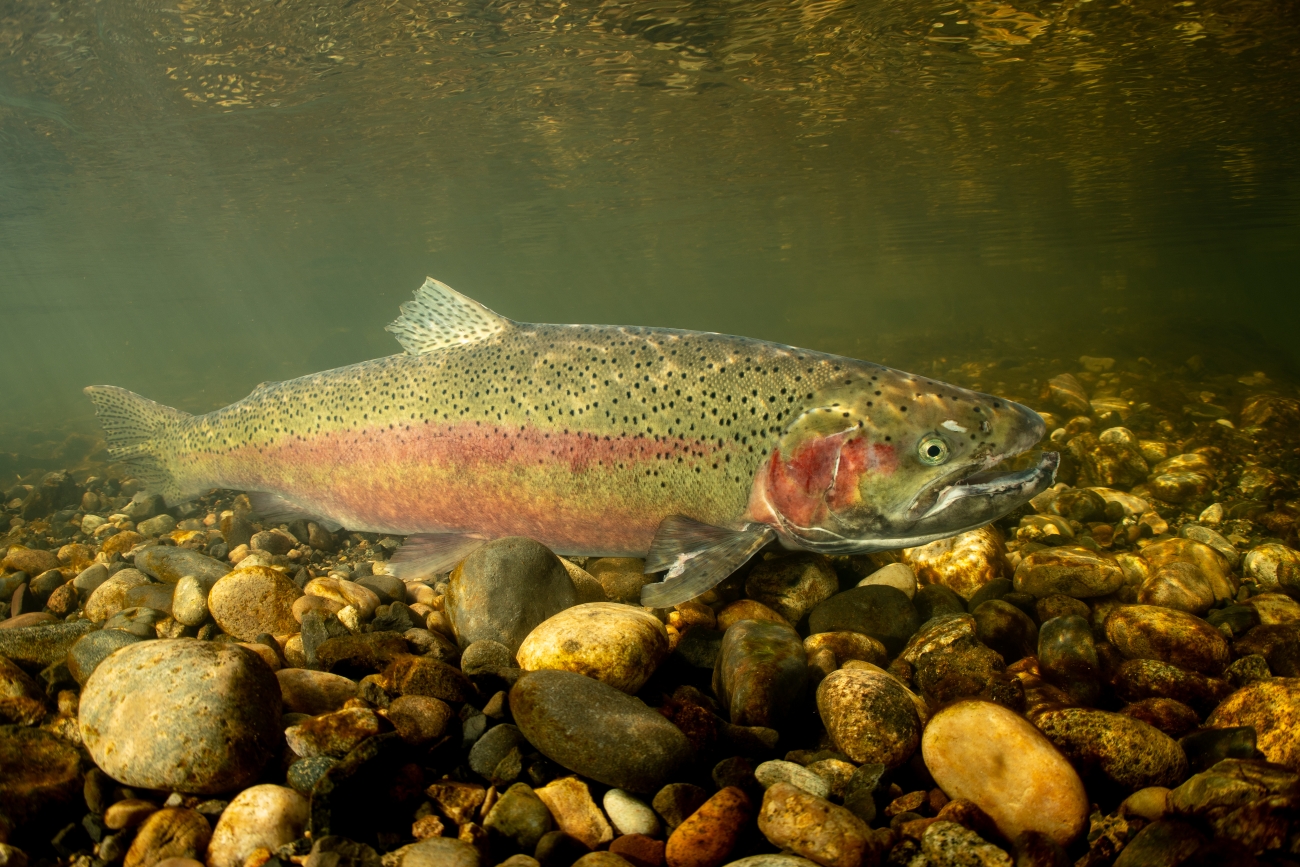
Steelhead are the sea-going form of rainbow trout, Oncorhynchus mykiss. They return to freshwater to reproduce; resident rainbow trout remain in freshwater. Both belong to the same species, and colour or size alone does not establish an individual fish's complete life history. The river also contains other salmonids, so learn current identification and retention rules before deciding to keep a fish. A silvery appearance is not permission to retain it.
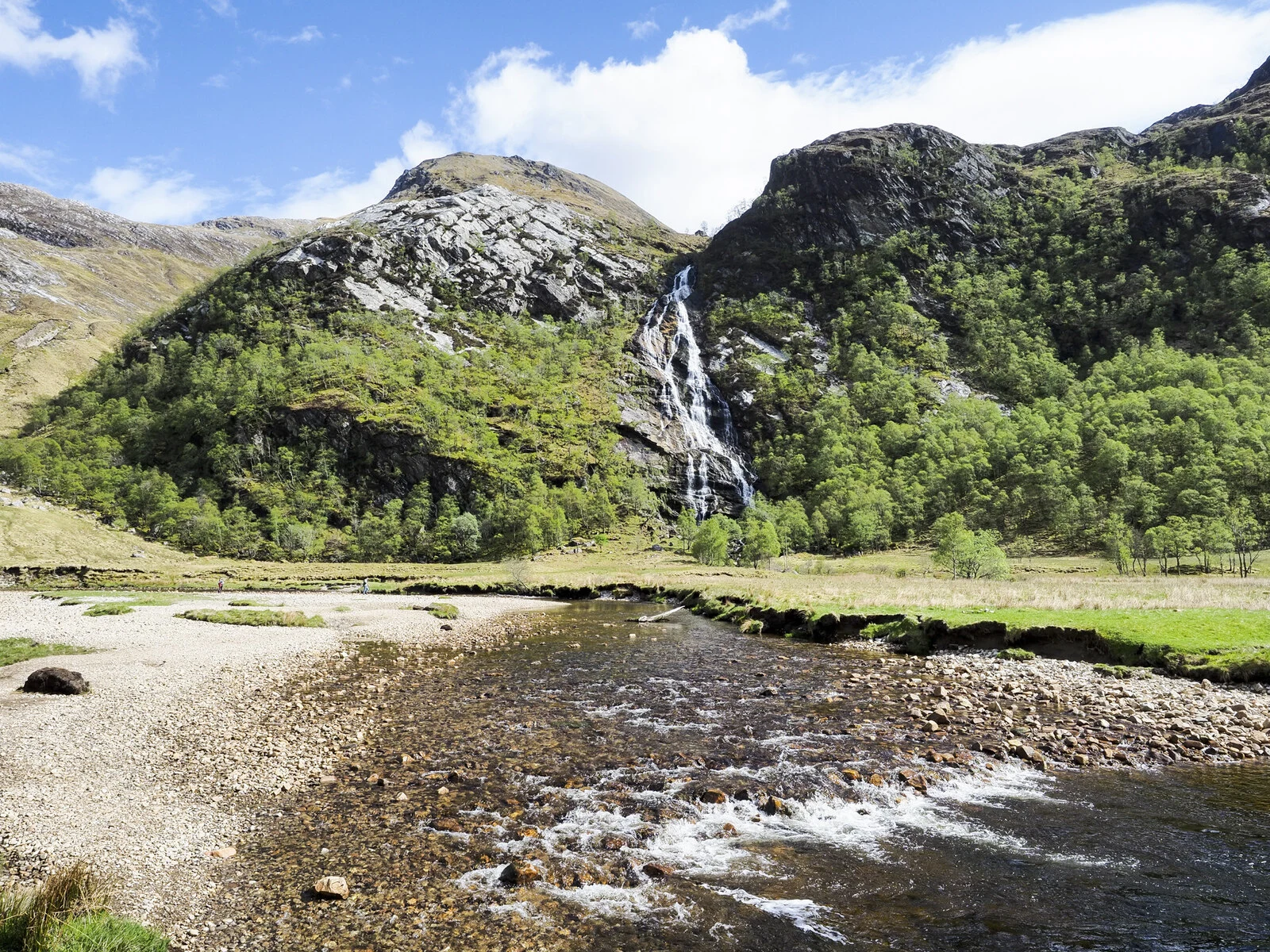
The Smith is in far northern coastal California near Crescent City and Hiouchi. A verified place to begin assessing bank access is Jedediah Smith Day Use Area, reached through the campground entrance west of Hiouchi. Its cobbled riverbank provides a real access reference, not a guarantee that any particular channel is open, fishable or safe at today's level. Check park access notices and choose a landing area before casting. Do not plan a winter route around a seasonal summer footbridge.
Winter-run steelhead enter coastal rivers during the colder part of the year. Water levels can change both movement and the stations anglers can reach. A falling river after rain may offer different opportunities from low, clear water, but neither condition guarantees fresh fish. Avoid treating a single advertised month or flow number as a bite forecast.
Steelhead diets across their life cycle include aquatic and terrestrial invertebrates, fish eggs, crustaceans and small fish. The food available to a juvenile in a stream differs from that available during marine growth. A returning adult is on a spawning migration; do not assume that every winter strike demonstrates active feeding on a particular Smith River prey. Egg-like, insect-like and fish-shaped presentations are alternatives to test, rather than proof of an observed local diet.
Find a lane, not just deep water
Look for a walking-pace tongue beside stronger current, the soft edge downstream of a boulder, or the transition where a deeper pool begins to flatten. These features can reduce swimming effort while remaining connected to the main route. The visible surface is only a clue: a smooth glide can conceal fast water underneath, and darkness may be shade rather than depth.
Start at the near-bank seam before casting across it. Fish can use surprisingly close routes when the main channel is forceful. In clear, low water, step back and keep casts controlled; a splashy approach can disturb the very edge you intended to explore. Do not confuse a shallow spawning bed with a holding lie. Leave visible spawning fish and cleaned gravel nests alone.
| Feature or condition | Holding reason | Starting method | Presentation | Caveat |
|---|---|---|---|---|
| Soft seam beside a stronger tongue | Reduced effort beside a migration route | Float and jig | Drift parallel to the seam with the jig above the bed | Main-current line drag can pull the rig out |
| Boulder pocket with an open exit | Local current shelter | Short float drift | Place upstream and let the jig enter naturally | Too much depth catches the rock |
| Broad gravel run | Several possible travel lanes | Light drift rig | Compare short upstream-and-across casts lane by lane | Repeated dragging means excess weight |
| Open pool tail with manageable flow | A transition in depth and current | Swinging spinner or spoon | Cast across, settle briefly, then swing under control | Do not target redds or fish spawning in shallows |
| High but fishable edge | A softer route close to the bank | Float rig from a secure position | Short drifts with minimal loose line | Leave if the bank or water is unsafe |
| Low, clear open water | Fish may be harder to approach | Smaller jig and quieter casts | Extend the controlled drift rather than casting over fish | Low-flow closure can override every tactic |
Build a float-and-jig rig
A 9–10 ft medium or medium-light steelhead spinning rod with a smooth 3000-size reel is a useful bank starting point. Rod and reel labels vary; match the outfit to the total float, shot and jig weight. Around 15–20 lb braid gives manageable line control, with an 8–12 lb leader in clearer open water and a stronger leader where abrasion or fish size requires it. Do not choose a leader so light that it prevents a prompt landing.
Thread a bobber stop onto the main line, followed by a small bead and a sliding float. Tie the main line to a compact swivel. Tie roughly 60–90 cm of leader to the other end, then a single steelhead jig, initially around 1/16–1/8 oz. The jig includes its hook; a manufacturer-matched hook around size 2 to 1/0 is an illustrative range, not a separate hook to add below it.
Select a float with enough buoyancy for the entire hanging load. If extra split shot is needed to cock it correctly, distribute a small amount above the swivel rather than crimping heavily onto the thin leader. The float should stand visibly without lying flat or being submerged by its own tackle. Test that balance in nearby water.
Move the stop to set the approximate hook depth. Begin somewhat shallower than the estimated bed and deepen in small increments. The aim is a jig travelling near the holding layer, not a leader dragging for the whole drift. If every pass stops at the same point, shorten the depth before deciding it was a bite.
Fish the float with the current
Cast upstream and across far enough to give the jig time to settle before the likely station. Close the bail and lift spare line off competing currents. Feed only the slack needed for a free drift. A tight line towing the float toward you can lift the jig; a large loose loop delays bite detection.
Follow the float with the rod. Compare its speed with nearby surface movement, while remembering that the jig is in a different layer. Correct an obvious upstream line belly with a gentle mend. If maintaining the drift takes repeated violent corrections, shorten the cast or change position.
A sudden dip, sideways movement or unexplained stop can be a take. Recover slack and make a firm, controlled lift. Repeated instant strikes into a fixed obstruction are a sign to reset depth. On contact with a fish, keep the rod loaded and use steady pressure rather than repeated hook-sets.
Start with a compact pink, orange, dark or mixed-colour jig. Choose contrast for visibility and a smaller, quieter profile when the water is clear. Those are practical comparisons, not a Smith River colour law. Test the same lane and depth before attributing an improvement to colour.
Compare a bottom-drift rig
Use this alternative where the run is open enough to learn occasional bottom contact without continually wedging tackle. For a clearly separated starting assembly, tie the main line to one eye of a three-way swivel, about 60–100 cm of 8–12 lb leader and a single hook to the second eye, and a short 10–15 cm nylon dropper carrying the drift sinker to the third. Use a weaker dropper than the main line so a stuck sinker is less likely to cost the whole rig. An initial size 4–1/0 hook should suit the permitted bait or compact yarn-and-buoyant-bead presentation, leaving the point unobstructed.
Where bait is lawful, a small cured-roe cluster is one option; it should fit the hook rather than bury it in a large mass. A yarn or artificial alternative avoids making the entire session depend on bait. Confirm the exact section's bait and hook requirements before choosing either.
Begin with roughly 1/4 oz of drift weight in modest flow, adjusting to the actual run and rod rating; some conditions require less or more. The useful test is occasional ticking while the rig keeps moving. Constant grinding means too much weight or a poor angle. No contact anywhere in a plausibly deep lane may mean insufficient sink time, too little weight or simply an incorrect depth estimate.
Cast upstream and across, recover loose line and track the rig as it approaches and passes you. Distinguish a regular gravel tick from a pause or increasing weight; wind into contact and lift firmly when the movement changes. If the rig snags repeatedly, reduce weight, shorten the drift or return to the float presentation. Do not convert the exercise into dragging a heavy hook through fish.
Add a swinging lure when the run allows it
A single-hook spinner or spoon around 1/4–1/2 oz offers a contrasting moving presentation in open water, provided its weight and hook arrangement are legal and suit the rod. Tie it to an abrasion-resistant leader around 1 m long; add only the compact swivel the lure needs to manage twist.
Cast across or slightly upstream, allow a brief controlled sink, then maintain enough contact for the lure to work as it swings downstream. A spinner's blade needs flow to turn; a spoon should wobble rather than spin uncontrollably. Test beside the bank first. Too much tension can bring either lure high, while too much settling time creates a snagging pass.
After a clean swing, move a small distance along the permitted bank and repeat so successive arcs cover different lanes. A strike under tension calls for continuing to wind and lifting into the fish, not throwing slack back toward it. Use the float again if the swing sweeps past the holding position too quickly.
Work one morning methodically
At the day-use access, inspect the current river level and select one reachable seam with a clear landing route. Spend the first twenty minutes with the float rig, starting shallow and adjusting until the jig travels cleanly near the suspected layer. Keep a note of the stop position rather than changing it randomly.
Cover the near seam, middle lane and any reachable far edge in order. After several clean drifts through each, change angle before changing jig colour. A position a few metres upstream can let the jig settle earlier and remain in the lane longer.
If the run is open and the float gives no response, use the drift rig to test a different near-bed presentation, or swing the lure through a broad pool tail. Change only one method at a time. If every option is being swept away or snagged, choose a more manageable run. A quiet morning cannot prove the river lacks steelhead.
Rules and a brief landing note
Before fishing, check California Department of Fish and Wildlife's current Smith River section rules, steelhead report-card requirements and North Coast low-flow status. Seasonal low-flow closures can prevent fishing even when a bank is accessible. Use the current official status rather than a remembered discharge threshold, and confirm hooks, bait and retention for the exact reach.
Use secure bank positions and abandon rising or unsafe water. Land fish promptly with an appropriate net, keep released fish wet and supported, and avoid the gills. Do not wade across unfamiliar winter flow to follow a hooked fish; an accessible landing route is part of choosing the run.